

LEARNING PATH
Learning Path Example
Add short description so it will appear in the first section of the dynamic sales page
€499,00
View path →
LEARNING PATH
Learning path test 3_Fraud
Learning path test 3_Fraud short description here
€499,00
View path →

LEARNING PATH
Test Learning Path — SAP Audit Mastery
Short Description of Product here
Complete SAP audit path · 2 courses · 6-month access
€499,00
View path →
LEARNING PATH
Test Learning Path 2
Write short description of learning path 2 here.
€499,00
View path →

DATA VERIFICATION
D01: General ledger – trial balance reconciliation
Learn to reconcile the general ledger to the trial balance. Ensure that all journal entries have been obtained for the correct period and company codes. This course gives you the fraud scenario, the SAP data you need from ECC or S/4HANA, the Python code and logic, and a hands-on dashboard with an AI chatbot to test your data literacy.
€99,00
View →

DATA VERIFICATION
D02: Debit = Credit
Learn to identify journal entries for which total debit is not equal to total credit. Ensure that the general ledger has been obtained for the entire period and has been correctly filtered on transactions that are not pre-posting. This course gives you the fraud scenario, the SAP data you need from ECC or S/4HANA, the Python code and logic, and a hands-on dashboard with an AI chatbot to test your data literacy.
€99,00
View →

DATA VERIFICATION
D03: Accounts Payable Ledger vs General Ledger
Learn to reconcile the supplier auxiliary ledger to the general ledger. Ensure that all supplier movements have been obtained for the correct period and company code. This course gives you the fraud scenario, the SAP data you need from ECC or S/4HANA, the Python code and logic, and a hands-on dashboard with an AI chatbot to test your data literacy.
€99,00
View →

DATA VERIFICATION
D04: Accounts Receivable Ledger vs General Ledger
Learn to reconcile the customer auxiliary ledger to the general ledger. Ensure that all customer movements have been obtained for the correct period and company code. This course gives you the fraud scenario, the SAP data you need from ECC or S/4HANA, the Python code and logic, and a hands-on dashboard with an AI chatbot to test your data literacy.
€99,00
View →

DATA VERIFICATION
D05: Stock ledger vs General Ledger
Learn to reconcile the stock movements to the general ledger. Ensure that all inventory movements have been obtained for the correct period and company code. This course gives you the fraud scenario, the SAP data you need from ECC or S/4HANA, the Python code and logic, and a hands-on dashboard with an AI chatbot to test your data literacy.
€99,00
View →

DATA VERIFICATION
D06: Fixed Assets Ledger vs General Ledger
Learn to reconcile the fixed assets movements to the general ledger. Ensure that all fixed assets movements have been obtained for the correct period and company code. This course gives you the fraud scenario, the SAP data you need from ECC or S/4HANA, the Python code and logic, and a hands-on dashboard with an AI chatbot to test your data literacy.
€99,00
View →

DATA VERIFICATION
D07: Payroll vs General Ledger
Learn to reconcile all payroll transactions to the general ledger. Ensure that all payroll transactions have been obtained for the correct period and company code. This course gives you the fraud scenario, the SAP data you need from ECC or S/4HANA, the Python code and logic, and a hands-on dashboard with an AI chatbot to test your data literacy.
€99,00
View →

DATA VERIFICATION
D08: Accounts Payable Ledger vs Supply Chain
Learn to create a process mining graph to show an overview of all of the data from purchase orders through to payments. Separation of duties issues, cut-off issues and over-invoicing issues, or incorrect or incomplete data-sets. This course gives you the fraud scenario, the SAP data you need from ECC or S/4HANA, the Python code and logic, and a hands-on dashboard with an AI chatbot to test your data literacy.
€99,00
View →

DATA VERIFICATION
D09: Accounts Receivable Ledger vs Sales
Learn to create a process mining graph to show an overview of all of the data from sales orders to customer receivables. Separation of duties issues, cut-off issues and under-billing issues, or incorrect or incomplete data-sets. This course gives you the fraud scenario, the SAP data you need from ECC or S/4HANA, the Python code and logic, and a hands-on dashboard with an AI chatbot to test your data literacy.
€99,00
View →
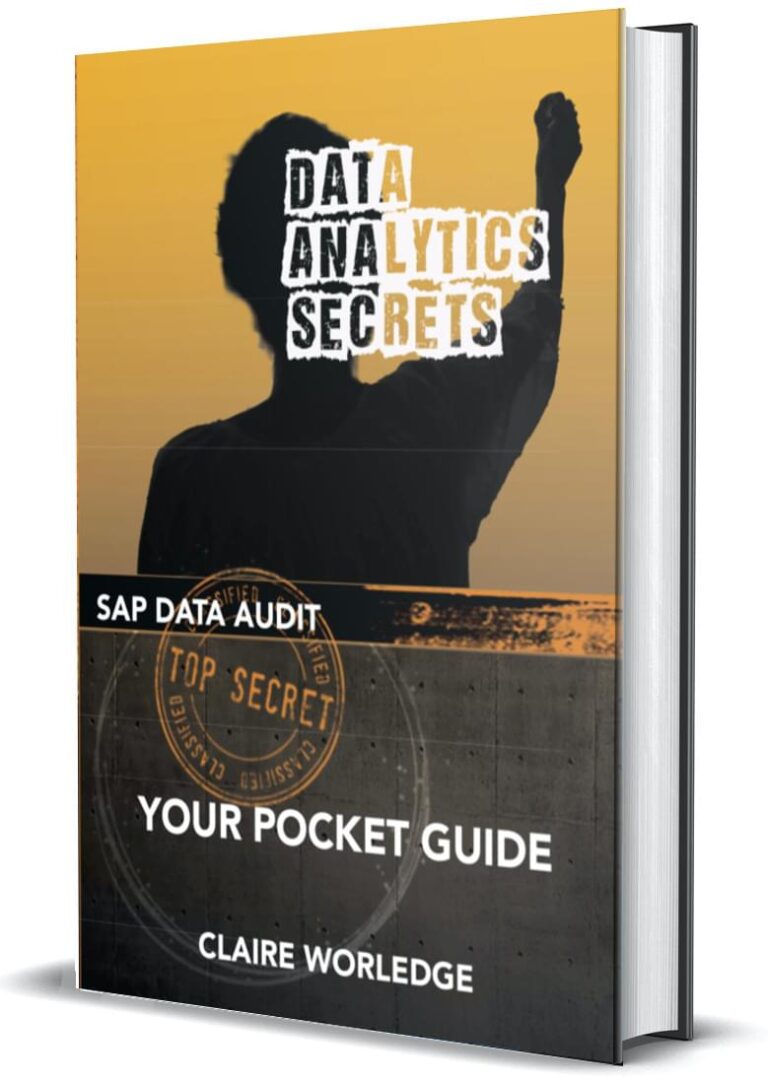
Data Analytics Secrets Book
€54,00
View →

FIXED ASSETS
FA01_01: Unnecessary Fixed Assets
Learn to identify fixed assets of a high volume or value that are unusual compared to similar entities or operating units. Employees purchase fixed assets that are not necessary for the entity. This course gives you the fraud scenario, the SAP data you need from ECC or S/4HANA, the Python code and logic, and a hands-on dashboard with an AI chatbot to test your data literacy.
€99,00
View →

FIXED ASSETS
FA01_02: High Acquisition Value
Learn to identify fixed assets that are of unusually high value for their category. Employees purchase fixed assets (such as a Ferrari) of an inappropriate value, outside company guidelines, or from a supplier in which they have a vested interest. This course gives you the fraud scenario, the SAP data you need from ECC or S/4HANA, the Python code and logic, and a hands-on dashboard with an AI chatbot to test your data literacy.
€99,00
View →

FIXED ASSETS
FA01_03: Incorrect Asset Class
Learn to identify fixed assets that are in the wrong asset class given their title or description. Employees incorrectly categorize fixed assets to have a shorter lifetime, or to acquire the asset once it is written down. This course gives you the fraud scenario, the SAP data you need from ECC or S/4HANA, the Python code and logic, and a hands-on dashboard with an AI chatbot to test your data literacy.
€99,00
View →

FIXED ASSETS
FA01_04: Short Life-Time
Learn to identify fixed assets that have an inappropriately short life-time for their category. Employees purchase fixed assets and get them written down quickly so they can sell them off to a parallel company. This course gives you the fraud scenario, the SAP data you need from ECC or S/4HANA, the Python code and logic, and a hands-on dashboard with an AI chatbot to test your data literacy.
€99,00
View →

FIXED ASSETS
FA02_01: Incorrect NBV
Learn to identify fixed assets that have a lower than expected net book value. Users modify the fixed asset values manually to make the asset worthless, so it can be sold to a parallel business at a reduced value. This course gives you the fraud scenario, the SAP data you need from ECC or S/4HANA, the Python code and logic, and a hands-on dashboard with an AI chatbot to test your data literacy.
€99,00
View →

FIXED ASSETS
FA02_02: Assets Written Down At A Loss
Learn to identify fixed assets that are written down at a loss. Employees write off assets at a loss so they can misappropriate them for personal use or use in a parallel company. This course gives you the fraud scenario, the SAP data you need from ECC or S/4HANA, the Python code and logic, and a hands-on dashboard with an AI chatbot to test your data literacy.
€99,00
View →

FIXED ASSETS
FA03_01: Missing Assets
Learn to identify fixed assets that are on the fixed assets ledger but not the fixed assets list. Users purchase fixed assets and then use them for personal use or in a parallel company. This course gives you the fraud scenario, the SAP data you need from ECC or S/4HANA, the Python code and logic, and a hands-on dashboard with an AI chatbot to test your data literacy.
€99,00
View →

FINANCIAL REPORTING
FR01_01: Unusual Bank Reconciliation Adjustments
Learn to identify unusual bank reconciliation adjustments. Management enter unauthorized adjustment journal entries to cater for monthly gaps between the general ledger and the bank statement. This course gives you the fraud scenario, the SAP data you need from ECC or S/4HANA, the Python code and logic, and a hands-on dashboard with an AI chatbot to test your data literacy.
€99,00
View →

FINANCIAL REPORTING
FR02_01: Growing Invoices To Be Received Balance
Learn to analyse the value of the invoices-to-be-received balance over time, to determine if the balance grows or is being netted off in a timely manner. Use of the invoices-to-be-received account as a counterparty account for fictitious journal entries. This course gives you the fraud scenario, the SAP data you need from ECC or S/4HANA, the Python code and logic, and a hands-on dashboard with an AI chatbot to test your data literacy.
€99,00
View →

FINANCIAL REPORTING
FR02_02: Growing Invoices To Be Issued Balance
Learn to analyse the value of the invoices-to-be-issued balance over time, to determine if the balance grows or is being netted off in a timely manner. Use of the invoices-to-be-issued account as a counterparty account for fictitious journal entries. This course gives you the fraud scenario, the SAP data you need from ECC or S/4HANA, the Python code and logic, and a hands-on dashboard with an AI chatbot to test your data literacy.
€99,00
View →

FINANCIAL REPORTING
FR02_03: Other Suspense Account Analysis
Learn to identify other suspense accounts (such as intercompany or VAT) that are growing over time. Use of other suspense accounts as a counterparty account for fictitious journal entries. This course gives you the fraud scenario, the SAP data you need from ECC or S/4HANA, the Python code and logic, and a hands-on dashboard with an AI chatbot to test your data literacy.
€99,00
View →

FINANCIAL REPORTING
FR02_04: Transactions To Fictitious Intercompany Accounts
Learn to identify journal entry schemes that are made to intercompany accounts that do not relate to a valid entity of the Group. Malicious users create fictitious intercompany accounts in the chart of accounts and then use these accounts as counterparty to fictitious transactions, such as the illegitimate writing-off of customer debt, fixed assets or inventory. This course gives you the fraud scenario, the SAP data you need from ECC or S/4HANA, the Python code and logic, and a hands-on dashboard with an AI chatbot to test your data literacy.
€99,00
View →

FINANCIAL REPORTING
FR03_01: Provisions For Bad Debt Not Posted
Learn to identify customer bad-debt for which no provisions, or inadequate provisions, have been made. Management do not declare bad-debt in order to hide the fact of not meeting accounts receivable targets. This course gives you the fraud scenario, the SAP data you need from ECC or S/4HANA, the Python code and logic, and a hands-on dashboard with an AI chatbot to test your data literacy.
€99,00
View →

FINANCIAL REPORTING
FR03_02: Provisions For Slow Rotation Not Posted
Learn to identify slow stock rotation for which no provisions, or inadequate provisions, have been made. Management do not post provisions for slow-moving stock in order to avoid recognising losses and to inflate the value of inventory. This course gives you the fraud scenario, the SAP data you need from ECC or S/4HANA, the Python code and logic, and a hands-on dashboard with an AI chatbot to test your data literacy.
€99,00
View →

FINANCIAL REPORTING
FR04_01: Debit-Credit Suppliers
Learn to identify journal entries that debit one supplier and credit another supplier. Malicious users carry out lapping, whereby money borrowed by an employee is concealed by transferring supplier debt from one third-party to another, in order to prevent the supplier balance from ageing. This course gives you the fraud scenario, the SAP data you need from ECC or S/4HANA, the Python code and logic, and a hands-on dashboard with an AI chatbot to test your data literacy.
€99,00
View →

FINANCIAL REPORTING
FR04_02: Credit-Debit Customers
Learn to identify journal entries that credit one customer and debit another customer. Malicious users carry out lapping, whereby a misappropriated customer receivable is concealed by transferring customer debt from one third-party to another, in order to prevent the customer balance from ageing. This course gives you the fraud scenario, the SAP data you need from ECC or S/4HANA, the Python code and logic, and a hands-on dashboard with an AI chatbot to test your data literacy.
€99,00
View →

FINANCIAL REPORTING
FR04_03: Debit-Credit Refresh
Learn to identify journal entries that debit and then credit the same supplier control account. Malicious users refresh the supplier balance to conceal outstanding supplier debt, or to cancel anticipated supplier invoices from a prior period. This course gives you the fraud scenario, the SAP data you need from ECC or S/4HANA, the Python code and logic, and a hands-on dashboard with an AI chatbot to test your data literacy.
€99,00
View →

FINANCIAL REPORTING
FR04_04: Credit-debit Refresh
Learn to identify journal entries that credit the customer and then debit the customer. Malicious users refresh the customer balance to conceal money borrowed, to hide poor accounts receivable performance, or to hide the prior entry of fictitious customer invoices. This course gives you the fraud scenario, the SAP data you need from ECC or S/4HANA, the Python code and logic, and a hands-on dashboard with an AI chatbot to test your data literacy.
€99,00
View →

FINANCIAL REPORTING
FR04_05: Debit P&L, Credit Bank
Learn to identify journal entries that debit profit and loss and credit bank. Malicious users make unauthorized payments and do not book them to a third-party, in order to prevent traceability of the beneficiary. This course gives you the fraud scenario, the SAP data you need from ECC or S/4HANA, the Python code and logic, and a hands-on dashboard with an AI chatbot to test your data literacy.
€99,00
View →

FINANCIAL REPORTING
FR04_06: Credit Customer, Debit P&L
Learn to identify journal entries that credit customers and debit loss. Management writes off customer debt to hide poor accounts receivable performance, in return for a kickback or repeat business, or to hide fictitious customer invoices. This course gives you the fraud scenario, the SAP data you need from ECC or S/4HANA, the Python code and logic, and a hands-on dashboard with an AI chatbot to test your data literacy.
€99,00
View →

FINANCIAL REPORTING
FR04_07: Unusual Supplier Transactions
Learn to identify supplier transactions with accounting schemes that could not be categorized as invoices, payments, cancellations or otherwise. Accounting use unusual counterparty accounts to enter fictitious transactions, such as writing off a customer debt to an unrelated supplier account or booking purchases to uncontrolled suspense accounts. This course gives you the fraud scenario, the SAP data you need from ECC or S/4HANA, the Python code and logic, and a hands-on dashboard with an AI chatbot to test your data literacy.
€99,00
View →

FINANCIAL REPORTING
FR04_08: Unusual Customer Transactions
Learn to identify customer transactions with accounting schemes that could not be categorized as invoices, payments, cancellations or otherwise. Accounting use unusual counterparty accounts to enter fictitious transactions, such as writing off a customer debt to an unrelated supplier, suspense or uncontrolled intercompany account. This course gives you the fraud scenario, the SAP data you need from ECC or S/4HANA, the Python code and logic, and a hands-on dashboard with an AI chatbot to test your data literacy.
€99,00
View →

FINANCIAL REPORTING
FR04_09: Unusual Accounting Schemes
Learn to identify journal entries of high value for which the combination of debit-credit accounts is rare or does not follow authorized accounting schemes. Accounting errors or unusual accounting schemes outside the standard accounting manual are used to falsify the accounts or hide illegitimate transactions. This course gives you the fraud scenario, the SAP data you need from ECC or S/4HANA, the Python code and logic, and a hands-on dashboard with an AI chatbot to test your data literacy.
€99,00
View →

FINANCIAL REPORTING
FR05_01: High Value/ Volume Pre-Closing
Learn to identify large value manual journal entries entered just before year-end closing. Manipulation of the accounts to meet year-end objectives. This course gives you the fraud scenario, the SAP data you need from ECC or S/4HANA, the Python code and logic, and a hands-on dashboard with an AI chatbot to test your data literacy.
€99,00
View →

FINANCIAL REPORTING
FR05_02: Post-closing Clean-up
Learn to identify large value manual journal entries entered just after year-end closing, especially those relating to cancellations. Manipulation of the accounts to meet year-end objectives. This course gives you the fraud scenario, the SAP data you need from ECC or S/4HANA, the Python code and logic, and a hands-on dashboard with an AI chatbot to test your data literacy.
€99,00
View →

FINANCIAL REPORTING
FR05_03: Duplicate Manual Journal Entries
Learn to identify journal entries that have the same date, amount, user, third-party and accounting scheme. Management repeat high value journal entries to manipulate the accounts, duplicate transactions to receive a kickback, or duplicate transactions to fuel a parallel business. This course gives you the fraud scenario, the SAP data you need from ECC or S/4HANA, the Python code and logic, and a hands-on dashboard with an AI chatbot to test your data literacy.
€99,00
View →

FINANCIAL REPORTING
FR05_04: Unusual High Value Transactions
Learn to calculate year-on-year and month-on-month ratios in order to identify unusually high transactions. Unusual items, such as high values of stock write-offs, fixed-asset cessions at a loss or sudden increases in sales or losses, are used to manipulate the financial statements. This course gives you the fraud scenario, the SAP data you need from ECC or S/4HANA, the Python code and logic, and a hands-on dashboard with an AI chatbot to test your data literacy.
€99,00
View →

FINANCIAL REPORTING
FR06_01: Document Date After Input Date/ Posting Date
Learn to identify journal entries for which the document date is after the input date or the posting date. Users forward-date transactions in order to support early payments to suppliers. This course gives you the fraud scenario, the SAP data you need from ECC or S/4HANA, the Python code and logic, and a hands-on dashboard with an AI chatbot to test your data literacy.
€99,00
View →

FINANCIAL REPORTING
FR06_02: Posting Date And Document Date In Different Periods
Learn to identify journal entries for which the document date is in a different fiscal period to the posting date. Management incorrectly enter the posting date in order to move cost or profit between periods. This course gives you the fraud scenario, the SAP data you need from ECC or S/4HANA, the Python code and logic, and a hands-on dashboard with an AI chatbot to test your data literacy.
€99,00
View →

FINANCIAL REPORTING
FR06_03: Manual Journal Entries With Long Delay To Entry
Learn to identify journal entries for which there is a long time delay between the document date and the input date. The finance department gets behind with accounting tasks, resulting in inaccurate financial reporting and poor internal control. This course gives you the fraud scenario, the SAP data you need from ECC or S/4HANA, the Python code and logic, and a hands-on dashboard with an AI chatbot to test your data literacy.
€99,00
View →

FINANCIAL REPORTING
FR07_01: Manual Journal Entries To Obsolete General Ledger Accounts
Learn to identify journal entries that are made to general ledger accounts that are no longer found in the chart of accounts. Incorrect, obsolete or temporary counterparty accounts are used to avoid internal controls and support the posting of fictitious transactions. This course gives you the fraud scenario, the SAP data you need from ECC or S/4HANA, the Python code and logic, and a hands-on dashboard with an AI chatbot to test your data literacy.
€99,00
View →

FINANCIAL REPORTING
FR08_01: Manual Journal Entries With Key Word Code/ User Name
Learn to identify manual journal entries that are entered with a key word or user name. Management use the company to run a parallel business and flag all transactions for the parallel business with a key word for easy identification. This course gives you the fraud scenario, the SAP data you need from ECC or S/4HANA, the Python code and logic, and a hands-on dashboard with an AI chatbot to test your data literacy.
€99,00
View →

FINANCIAL REPORTING
FR08_02: Manual Journal Entries With No Description
Learn to identify manual journal entries of a high value and without any description. Users fail to enter text descriptions for fraudulent journal entries in the hope that they will go unnoticed by management. This course gives you the fraud scenario, the SAP data you need from ECC or S/4HANA, the Python code and logic, and a hands-on dashboard with an AI chatbot to test your data literacy.
€99,00
View →

FINANCIAL REPORTING
FR09_01: Users Entering Journal Entries Out Of Hours
Learn to identify journal entries that are entered out of working hours, or during public holidays or weekends. Employees enter fraudulent journal entries whilst other members of staff are not in the office, in order to avoid detection. This course gives you the fraud scenario, the SAP data you need from ECC or S/4HANA, the Python code and logic, and a hands-on dashboard with an AI chatbot to test your data literacy.
€99,00
View →

FINANCIAL REPORTING
FR09_02: Journal Entries Entered By Top Management/ Generic Users/ IT Users/ System Users
Learn to identify journal entries entered by top management, generic users, IT users or system users. Top management enter journal entries themselves, or through generic accounts or IT, in order to manipulate the financial statements without traceability to the perpetrator. This course gives you the fraud scenario, the SAP data you need from ECC or S/4HANA, the Python code and logic, and a hands-on dashboard with an AI chatbot to test your data literacy.
€99,00
View →

FINANCIAL REPORTING
FR09_03: Journal Entries Entered By Users That Have Left The Company
Learn to identify journal entries entered by users that have left the company. Fictitious journal entries are entered using a user account that cannot be traced back to the employee. This course gives you the fraud scenario, the SAP data you need from ECC or S/4HANA, the Python code and logic, and a hands-on dashboard with an AI chatbot to test your data literacy.
€99,00
View →

FINANCIAL REPORTING
FR09_04: Manual Journal Entries Entered By Unusual Users
Learn to identify journal entries for which the user rarely enters journal entries. A malicious user, for whom entering journal entries is not part of their job function, enters fictitious transactions. This course gives you the fraud scenario, the SAP data you need from ECC or S/4HANA, the Python code and logic, and a hands-on dashboard with an AI chatbot to test your data literacy.
€99,00
View →

FINANCIAL REPORTING
FR10_01: Gaps In Journal Entry Numbers
Learn to identify gaps in journal entry numbers. Direct updates to the database through IT data fixes or other means are used to delete fictitious transactions. This course gives you the fraud scenario, the SAP data you need from ECC or S/4HANA, the Python code and logic, and a hands-on dashboard with an AI chatbot to test your data literacy.
€99,00
View →

FINANCIAL REPORTING
FR10_02: Duplicate Journal Entry Numbers
Learn to identify journal entries that are duplicated. Management request IT to make a data fix that results in errors in financial reporting. This course gives you the fraud scenario, the SAP data you need from ECC or S/4HANA, the Python code and logic, and a hands-on dashboard with an AI chatbot to test your data literacy.
€99,00
View →

HUMAN RESOURCES
HR01_01: On Payroll Not Active
Learn to identify employees that are on the payroll but that do not have access to IT. Ghost employees. This course gives you the fraud scenario, the SAP data you need from ECC or S/4HANA, the Python code and logic, and a hands-on dashboard with an AI chatbot to test your data literacy.
€99,00
View →

HUMAN RESOURCES
HR01_02: On Payroll But Not In Building Access Logs
Learn to identify employees that are on the payroll but that are not in building access logs. Ghost employees. This course gives you the fraud scenario, the SAP data you need from ECC or S/4HANA, the Python code and logic, and a hands-on dashboard with an AI chatbot to test your data literacy.
€99,00
View →

HUMAN RESOURCES
HR01_03: On Payroll No Social Insurance
Learn to identify employees that are on the payroll but not on the list of social insurance payments. Ghost employees. This course gives you the fraud scenario, the SAP data you need from ECC or S/4HANA, the Python code and logic, and a hands-on dashboard with an AI chatbot to test your data literacy.
€99,00
View →

HUMAN RESOURCES
HR01_04: On Payroll Never Holidays
Learn to identify employees that are on the payroll but not on the list of vacation requests. Ghost employees. This course gives you the fraud scenario, the SAP data you need from ECC or S/4HANA, the Python code and logic, and a hands-on dashboard with an AI chatbot to test your data literacy.
€99,00
View →

HUMAN RESOURCES
HR01_05: On Payroll Not Personnel
Learn to identify employees that are on the payroll but not in the list of personnel. Ghost employees. This course gives you the fraud scenario, the SAP data you need from ECC or S/4HANA, the Python code and logic, and a hands-on dashboard with an AI chatbot to test your data literacy.
€99,00
View →

HUMAN RESOURCES
HR01_06: On Payroll Left The Company
Learn to identify employees that are on the payroll but that have left the company. Ghost employees. This course gives you the fraud scenario, the SAP data you need from ECC or S/4HANA, the Python code and logic, and a hands-on dashboard with an AI chatbot to test your data literacy.
€99,00
View →

HUMAN RESOURCES
HR01_07: Unusual Pay Rate Per Grade
Learn to identify employees that have an unusual pay rate for their grade. Inappropriate and unauthorized employee compensation. This course gives you the fraud scenario, the SAP data you need from ECC or S/4HANA, the Python code and logic, and a hands-on dashboard with an AI chatbot to test your data literacy.
€99,00
View →

HUMAN RESOURCES
HR01_08: High Pay Rise
Learn to identify employees that have an unusually high percentage salary increase year-on-year. Inappropriate and unauthorized employee compensation. This course gives you the fraud scenario, the SAP data you need from ECC or S/4HANA, the Python code and logic, and a hands-on dashboard with an AI chatbot to test your data literacy.
€99,00
View →

HUMAN RESOURCES
HR01_09: High Bonus
Learn to identify employees that have an unusually high bonus. Employee bonuses used to fuel bribes for third-parties. This course gives you the fraud scenario, the SAP data you need from ECC or S/4HANA, the Python code and logic, and a hands-on dashboard with an AI chatbot to test your data literacy.
€99,00
View →

HUMAN RESOURCES
HR01_10: High-Value Commissions
Learn to identify employees receiving high-value bonuses or commissions. The company provides employees with high-value commissions so that they can use these as a bribe for third-parties. This course gives you the fraud scenario, the SAP data you need from ECC or S/4HANA, the Python code and logic, and a hands-on dashboard with an AI chatbot to test your data literacy.
€99,00
View →

HUMAN RESOURCES
HR01_11: Debtor Employees
Learn to identify employees that are debtors. Overpayment of employee expenses, or outstanding employee loans. This course gives you the fraud scenario, the SAP data you need from ECC or S/4HANA, the Python code and logic, and a hands-on dashboard with an AI chatbot to test your data literacy.
€99,00
View →

HUMAN RESOURCES
HR01_12: Unmatched Payments
Learn to identify employees that have unmatched payments. Unauthorized employee payments, or employee payments used as a bribe for third-parties. This course gives you the fraud scenario, the SAP data you need from ECC or S/4HANA, the Python code and logic, and a hands-on dashboard with an AI chatbot to test your data literacy.
€99,00
View →

HUMAN RESOURCES
HR01_13: Same Bank Account Different Employee
Learn to identify employees that share bank accounts. Misappropriation of employee payments. This course gives you the fraud scenario, the SAP data you need from ECC or S/4HANA, the Python code and logic, and a hands-on dashboard with an AI chatbot to test your data literacy.
€99,00
View →

HUMAN RESOURCES
HR02_01: Loans But Not On Payroll
Learn to identify employees with loans but that are not on the payroll. Misappropriation of company loans, or loans used as a bribe for a third-party. This course gives you the fraud scenario, the SAP data you need from ECC or S/4HANA, the Python code and logic, and a hands-on dashboard with an AI chatbot to test your data literacy.
€99,00
View →

HUMAN RESOURCES
HR02_02: Loans But Not In Active Directory
Learn to identify employees that have loans but that do not have access to the IT system. Misappropriation of company loans, or loans used as a bribe for a third-party. This course gives you the fraud scenario, the SAP data you need from ECC or S/4HANA, the Python code and logic, and a hands-on dashboard with an AI chatbot to test your data literacy.
€99,00
View →

HUMAN RESOURCES
HR02_03: Loans But Not In Building Access Logs
Learn to identify employees with loans but that are not on the building access logs. Misappropriation of company loans, or loans used as a bribe for a third-party. This course gives you the fraud scenario, the SAP data you need from ECC or S/4HANA, the Python code and logic, and a hands-on dashboard with an AI chatbot to test your data literacy.
€99,00
View →

HUMAN RESOURCES
HR02_04: Loans But No Social Insurance
Learn to identify employees that have loans but that are not on the list of social insurance. Misappropriation of company loans, or loans used as a bribe for a third-party. This course gives you the fraud scenario, the SAP data you need from ECC or S/4HANA, the Python code and logic, and a hands-on dashboard with an AI chatbot to test your data literacy.
€99,00
View →

HUMAN RESOURCES
HR02_05: Loans But No Holidays
Learn to identify employees that have loans but that never go on holiday. Misappropriation of company loans, or loans used as a bribe for a third-party. This course gives you the fraud scenario, the SAP data you need from ECC or S/4HANA, the Python code and logic, and a hands-on dashboard with an AI chatbot to test your data literacy.
€99,00
View →

HUMAN RESOURCES
HR02_06: Loans But Not In Personnel
Learn to identify employees that have a loan but that are not on the list of personnel. Misappropriation of company loans, or loans used as a bribe for a third-party. This course gives you the fraud scenario, the SAP data you need from ECC or S/4HANA, the Python code and logic, and a hands-on dashboard with an AI chatbot to test your data literacy.
€99,00
View →

HUMAN RESOURCES
HR02_07: Loans Just Before Leaving
Learn to identify employees that get loans within one month of their leaving date. Misappropriation of company loans, or loans used as a bribe for a third-party. This course gives you the fraud scenario, the SAP data you need from ECC or S/4HANA, the Python code and logic, and a hands-on dashboard with an AI chatbot to test your data literacy.
€99,00
View →

HUMAN RESOURCES
HR02_08: Unpaid Loans
Learn to identify employees that have not repaid their loans. Misappropriation of company loans, or loans used as a bribe for a third-party. This course gives you the fraud scenario, the SAP data you need from ECC or S/4HANA, the Python code and logic, and a hands-on dashboard with an AI chatbot to test your data literacy.
€99,00
View →

HUMAN RESOURCES
HR02_09: Multiple Loans
Learn to identify employees that have multiple loans of the same type. Misappropriation of company loans, or loans used as a bribe for a third-party. This course gives you the fraud scenario, the SAP data you need from ECC or S/4HANA, the Python code and logic, and a hands-on dashboard with an AI chatbot to test your data literacy.
€99,00
View →

HUMAN RESOURCES
HR03_01: Expenses No Payroll
Learn to identify expenses for employees not in payroll. Misappropriation of disbursements through fictitious expense claims, or expenses used as a bribe for a third-party. This course gives you the fraud scenario, the SAP data you need from ECC or S/4HANA, the Python code and logic, and a hands-on dashboard with an AI chatbot to test your data literacy.
€99,00
View →

HUMAN RESOURCES
HR03_02: Expenses No Active Directory
Learn to identify expenses for employees that do not have access to IT systems. Misappropriation of disbursements through fictitious expense claims, or expenses used as a bribe for a third-party. This course gives you the fraud scenario, the SAP data you need from ECC or S/4HANA, the Python code and logic, and a hands-on dashboard with an AI chatbot to test your data literacy.
€99,00
View →

HUMAN RESOURCES
HR03_03: Expenses No Building Access
Learn to identify expenses for employees not in building access logs. Misappropriation of disbursements through fictitious expense claims, or expenses used as a bribe for a third-party. This course gives you the fraud scenario, the SAP data you need from ECC or S/4HANA, the Python code and logic, and a hands-on dashboard with an AI chatbot to test your data literacy.
€99,00
View →

HUMAN RESOURCES
HR03_04: Expenses No Social Insurance
Learn to identify expenses for employees not receiving any social insurance. Misappropriation of disbursements through fictitious expense claims, or expenses used as a bribe for a third-party. This course gives you the fraud scenario, the SAP data you need from ECC or S/4HANA, the Python code and logic, and a hands-on dashboard with an AI chatbot to test your data literacy.
€99,00
View →

HUMAN RESOURCES
HR03_05: Expenses No Holidays
Learn to identify expenses for employees that never take leave. Misappropriation of disbursements through fictitious expense claims, or expenses used as a bribe for a third-party. This course gives you the fraud scenario, the SAP data you need from ECC or S/4HANA, the Python code and logic, and a hands-on dashboard with an AI chatbot to test your data literacy.
€99,00
View →

HUMAN RESOURCES
HR03_06: Expenses For Employees Not In Personnel
Learn to identify expenses for employees that are not found in the list of personnel. Misappropriation of disbursements through fictitious expense claims, or expenses used as a bribe for a third-party. This course gives you the fraud scenario, the SAP data you need from ECC or S/4HANA, the Python code and logic, and a hands-on dashboard with an AI chatbot to test your data literacy.
€99,00
View →

HUMAN RESOURCES
HR03_07: Expenses Left The Company
Learn to identify expenses for employees that have left the company. Misappropriation of disbursements through fictitious expense claims, or expenses used as a bribe for a third-party. This course gives you the fraud scenario, the SAP data you need from ECC or S/4HANA, the Python code and logic, and a hands-on dashboard with an AI chatbot to test your data literacy.
€99,00
View →

HUMAN RESOURCES
HR03_08: Expenses Without Descriptions
Learn to identify expenses without descriptions. Misappropriation of disbursements through fictitious expense claims, or expenses used as a bribe for a third-party. This course gives you the fraud scenario, the SAP data you need from ECC or S/4HANA, the Python code and logic, and a hands-on dashboard with an AI chatbot to test your data literacy.
€99,00
View →

HUMAN RESOURCES
HR03_09: High Value Expenses
Learn to identify employees with unusually high expenses for the expense category. Misappropriation of disbursements through fictitious expense claims, or expenses used as a bribe for a third-party. This course gives you the fraud scenario, the SAP data you need from ECC or S/4HANA, the Python code and logic, and a hands-on dashboard with an AI chatbot to test your data literacy.
€99,00
View →

HUMAN RESOURCES
HR03_10: Duplicate Expenses
Learn to identify employees with duplicate expenses. Misappropriation of disbursements through fictitious expense claims, or expenses used as a bribe for a third-party. This course gives you the fraud scenario, the SAP data you need from ECC or S/4HANA, the Python code and logic, and a hands-on dashboard with an AI chatbot to test your data literacy.
€99,00
View →

HUMAN RESOURCES
HR03_11: Expenses Reimbursed Wrong Employee
Learn to identify employee expenses paid to an employee different to the claimant. Misappropriation of disbursements through fictitious expense claims, or expenses used as a bribe for a third-party. This course gives you the fraud scenario, the SAP data you need from ECC or S/4HANA, the Python code and logic, and a hands-on dashboard with an AI chatbot to test your data literacy.
€99,00
View →

HUMAN RESOURCES
HR03_12: Expenses Entered As Purchases
Learn to identify employee expenses that are entered as supplier transactions. Misclassification of expenses as supplier transactions in order to avoid controls. This course gives you the fraud scenario, the SAP data you need from ECC or S/4HANA, the Python code and logic, and a hands-on dashboard with an AI chatbot to test your data literacy.
€99,00
View →

HUMAN RESOURCES
HR03_13: Misclassified Expenses
Learn to identify expenses that should be classified as fixed assets or purchasing. Management misclassifies purchases as expenses to facilitate the purchase of items used for bribes of third-parties. This course gives you the fraud scenario, the SAP data you need from ECC or S/4HANA, the Python code and logic, and a hands-on dashboard with an AI chatbot to test your data literacy.
€99,00
View →

HUMAN RESOURCES
HR03_14: Expenses For Third-Parties
Learn to identify expenses that have the name of an individual or third-party in the description. Expenses are entered for third-parties in order to offer travel and entertainment as a bribe. This course gives you the fraud scenario, the SAP data you need from ECC or S/4HANA, the Python code and logic, and a hands-on dashboard with an AI chatbot to test your data literacy.
€99,00
View →

HUMAN RESOURCES
HR04_01: Timesheets Input >30 Days Late
Learn to identify time-sheets for which the input date is more than 30 days after the worked day. Fraud or error concerning the number of actual working hours compared to time-sheet input. This course gives you the fraud scenario, the SAP data you need from ECC or S/4HANA, the Python code and logic, and a hands-on dashboard with an AI chatbot to test your data literacy.
€99,00
View →

HUMAN RESOURCES
HR04_02: Employees > 40 Hours Overtime Per Week
Learn to identify employees with more than 40 hours overtime per week. Fraudulent or erroneous time-sheets, and projects going over budget. This course gives you the fraud scenario, the SAP data you need from ECC or S/4HANA, the Python code and logic, and a hands-on dashboard with an AI chatbot to test your data literacy.
€99,00
View →

HUMAN RESOURCES
HR04_03: Employees >80 Hour Weeks
Learn to identify employees with more than 80 hours of time-sheet entry per week. Over-estimated or fraudulent time-sheets, and fines from government due to too many working hours. This course gives you the fraud scenario, the SAP data you need from ECC or S/4HANA, the Python code and logic, and a hands-on dashboard with an AI chatbot to test your data literacy.
€99,00
View →

HUMAN RESOURCES
HR04_04: Projects >80 Hour Weeks
Learn to identify projects for which the input date is more than 30 days after the worked day. Projects that go over budget, or collusion with the company providing the resources. This course gives you the fraud scenario, the SAP data you need from ECC or S/4HANA, the Python code and logic, and a hands-on dashboard with an AI chatbot to test your data literacy.
€99,00
View →

HUMAN RESOURCES
HR04_05: Employees >50% Overtime
Learn to identify projects for which employees enter more than 40 hours of overtime per week on their time-sheets. Projects that go over budget, or collusion with the company providing the resources. This course gives you the fraud scenario, the SAP data you need from ECC or S/4HANA, the Python code and logic, and a hands-on dashboard with an AI chatbot to test your data literacy.
€99,00
View →

HUMAN RESOURCES
HR04_06: Employees > 80 Hour Weeks
Learn to identify projects for which employees enter more than 80 hours per week on their time-sheets. Projects that go over budget, or collusion with the company providing the resources. This course gives you the fraud scenario, the SAP data you need from ECC or S/4HANA, the Python code and logic, and a hands-on dashboard with an AI chatbot to test your data literacy.
€99,00
View →

HUMAN RESOURCES
HR05_01: Temporary Employees Many Years
Learn to identify employees that are temporary for more years than allowed by local regulations. Government fines. This course gives you the fraud scenario, the SAP data you need from ECC or S/4HANA, the Python code and logic, and a hands-on dashboard with an AI chatbot to test your data literacy.
€99,00
View →

INVENTORY
I01_01: GR No GI
Learn to identify items that are received but never issued. Items are purchased despite not being required and are subsequently scrapped or stolen from the warehouse, or to receive a kickback from a supplier in which a malicious user has a vested interest. This course gives you the fraud scenario, the SAP data you need from ECC or S/4HANA, the Python code and logic, and a hands-on dashboard with an AI chatbot to test your data literacy.
€99,00
View →

INVENTORY
I01_02: GRs With Outdated PO
Learn to identify goods receipts for which the purchase order is very old. Obsolete purchase orders are used to support the entry of a goods receipt from a supplier in which the employee has a vested interest, and to support the subsequent invoice. This course gives you the fraud scenario, the SAP data you need from ECC or S/4HANA, the Python code and logic, and a hands-on dashboard with an AI chatbot to test your data literacy.
€99,00
View →
INVENTORY
I01_03: GRs With Cancelled PO
Learn to identify goods receipts made for cancelled purchase orders. Illegitimate purchase orders are used to support the entry of a goods receipt from a supplier in which the employee has a vested interest. This course gives you the fraud scenario, the SAP data you need from ECC or S/4HANA, the Python code and logic, and a hands-on dashboard with an AI chatbot to test your data literacy.
€99,00
View →

INVENTORY
I01_04: GR Exceeding PO
Learn to identify goods receipts that exceed the purchase order value. Suppliers in which employees have a vested interest are allowed to over-deliver in order to inflate the invoice value. This course gives you the fraud scenario, the SAP data you need from ECC or S/4HANA, the Python code and logic, and a hands-on dashboard with an AI chatbot to test your data literacy.
€99,00
View →

INVENTORY
I01_05: GRs No PO Or Invoice
Learn to identify goods receipts that are not linked to purchase orders. Users enter goods receipts without purchase orders in order to circumvent purchasing controls. This course gives you the fraud scenario, the SAP data you need from ECC or S/4HANA, the Python code and logic, and a hands-on dashboard with an AI chatbot to test your data literacy.
€99,00
View →

INVENTORY
I01_06: Duplicate Receptions
Learn to identify duplicate receptions. Users create duplicate goods receipts for a supplier in which they have a vested interest and to support an inflated invoice value. This course gives you the fraud scenario, the SAP data you need from ECC or S/4HANA, the Python code and logic, and a hands-on dashboard with an AI chatbot to test your data literacy.
€99,00
View →

INVENTORY
I02_01: GIs With Outdated SOs
Learn to identify goods issues for which the sales order is very old. Obsolete sales orders are used to support illegitimate deliveries to a parallel business. This course gives you the fraud scenario, the SAP data you need from ECC or S/4HANA, the Python code and logic, and a hands-on dashboard with an AI chatbot to test your data literacy.
€99,00
View →

INVENTORY
I02_02: GIs With Cancelled SO
Learn to identify goods issues for which the sales order has been cancelled. Illegitimate sales orders are used to support illegitimate deliveries to a parallel business. This course gives you the fraud scenario, the SAP data you need from ECC or S/4HANA, the Python code and logic, and a hands-on dashboard with an AI chatbot to test your data literacy.
€99,00
View →

INVENTORY
I02_03: GI Exceeding SO
Learn to identify goods issues that exceed the sales order value. Users inflate the goods issue value in order to ship some of the products to a parallel business. This course gives you the fraud scenario, the SAP data you need from ECC or S/4HANA, the Python code and logic, and a hands-on dashboard with an AI chatbot to test your data literacy.
€99,00
View →

INVENTORY
I02_04: GIs No SO Or Invoice
Learn to identify goods issues that are not linked to sales orders or invoices. Users enter fictitious goods issues to hide stock misappropriation, or goods are shipped to a side business and not invoiced. This course gives you the fraud scenario, the SAP data you need from ECC or S/4HANA, the Python code and logic, and a hands-on dashboard with an AI chatbot to test your data literacy.
€99,00
View →

INVENTORY
I02_05: Supplier Returns Without Debit Note
Learn to identify goods returned to the supplier for which no debit note is raised. Users create a falsified debit note (with a different bank account number) for a supplier return, in order to misappropriate the reimbursement from the supplier. This course gives you the fraud scenario, the SAP data you need from ECC or S/4HANA, the Python code and logic, and a hands-on dashboard with an AI chatbot to test your data literacy.
€99,00
View →

INVENTORY
I03_01: GIT Never Arrived
Learn to identify goods in transit that do not arrive in the warehouse. Goods in transit are intercepted and redirected to a parallel company before they arrive in the warehouse. This course gives you the fraud scenario, the SAP data you need from ECC or S/4HANA, the Python code and logic, and a hands-on dashboard with an AI chatbot to test your data literacy.
€99,00
View →

INVENTORY
I03_02: GIT For A Long Time
Learn to identify goods in transit that remain in transit a long time. Goods in transit take longer to arrive due to logistics staff switching legitimate goods for fake goods, or goods in transit are stolen for a side-business. This course gives you the fraud scenario, the SAP data you need from ECC or S/4HANA, the Python code and logic, and a hands-on dashboard with an AI chatbot to test your data literacy.
€99,00
View →

INVENTORY
I04_01: Scrapped And Reordered
Learn to identify items that are scrapped and for which subsequent purchase orders are made. Items are entered fraudulently as scrapped before being misappropriated. This course gives you the fraud scenario, the SAP data you need from ECC or S/4HANA, the Python code and logic, and a hands-on dashboard with an AI chatbot to test your data literacy.
€99,00
View →

INVENTORY
I04_02: Stock Adjustments
Learn to identify unusually high volumes and values of stock adjustments. Warehouse staff write off stock and then steal it, or stock OUT/IN adjustments are used to refresh the age of stock to avoid posting provisions for slow rotation. This course gives you the fraud scenario, the SAP data you need from ECC or S/4HANA, the Python code and logic, and a hands-on dashboard with an AI chatbot to test your data literacy.
€99,00
View →

INVENTORY
I05_01: Negative Stock Balance
Learn to identify items that have a negative stock balance. Warehouse staff do an incorrect stock adjustment to write off misappropriated stock, resulting in a negative stock balance. This course gives you the fraud scenario, the SAP data you need from ECC or S/4HANA, the Python code and logic, and a hands-on dashboard with an AI chatbot to test your data literacy.
€99,00
View →

INVENTORY
I05_02: Stock Rupture
Learn to identify items for which the volume in stock is lower than the volume of sales orders. Items are not available to meet customer orders. This course gives you the fraud scenario, the SAP data you need from ECC or S/4HANA, the Python code and logic, and a hands-on dashboard with an AI chatbot to test your data literacy.
€99,00
View →

INVENTORY
I06_01: Stock Not On Consignment
Learn to identify stock that is recorded as normal stock, whereas it should normally be classified as on-consignment. Management inflates the value of stock on the balance sheet in order to manipulate the financial statements. This course gives you the fraud scenario, the SAP data you need from ECC or S/4HANA, the Python code and logic, and a hands-on dashboard with an AI chatbot to test your data literacy.
€99,00
View →

INVENTORY
I06_02: Unusual Transactions To-From Consignment
Learn to identify high-value stock transactions between consignment and non-consignment, as well as intercompany and back again. Management inflates the value of stock on the balance sheet in order to manipulate the financial statements. This course gives you the fraud scenario, the SAP data you need from ECC or S/4HANA, the Python code and logic, and a hands-on dashboard with an AI chatbot to test your data literacy.
€99,00
View →

INVENTORY
I06_03: Inventory As Fixed Assets
Learn to identify items in stock that should have been recorded as fixed assets. Management classifies inventory as fixed assets in order to reduce costs in the current period. This course gives you the fraud scenario, the SAP data you need from ECC or S/4HANA, the Python code and logic, and a hands-on dashboard with an AI chatbot to test your data literacy.
€99,00
View →

INVENTORY
I07_01: Duplicate Articles
Learn to identify articles entered twice in the database and used with different price conditions. A malicious user makes a copy of an article with a reduced price to support sales orders for customers in which they have a special relationship, or with an inflated price to support purchase orders for suppliers in which they have a special relationship. This course gives you the fraud scenario, the SAP data you need from ECC or S/4HANA, the Python code and logic, and a hands-on dashboard with an AI chatbot to test your data literacy.
€99,00
View →

INVENTORY
I07_02: Generic Articles
Learn to identify generic articles, or articles with no description. Generic articles are used to hide the purchase of illegitimate items or to avoid pricing controls. This course gives you the fraud scenario, the SAP data you need from ECC or S/4HANA, the Python code and logic, and a hands-on dashboard with an AI chatbot to test your data literacy.
€99,00
View →

INVENTORY
I07_03: New Articles
Learn to identify articles that have been newly entered and that are for items not used by the company. Malicious users enter item codes for purchases that are not necessary for the company but that are used directly by employees. This course gives you the fraud scenario, the SAP data you need from ECC or S/4HANA, the Python code and logic, and a hands-on dashboard with an AI chatbot to test your data literacy.
€99,00
View →

USER ACCESS
IT01_01: Manual Journal Entries By Generic/ High-Profile Users
Learn to identify high-profile, generic or IT users that enter high value journal entries. Management enter, or request IT to enter, high value journal entries in order to manipulate the financial statements. This course gives you the fraud scenario, the SAP data you need from ECC or S/4HANA, the Python code and logic, and a hands-on dashboard with an AI chatbot to test your data literacy.
€99,00
View →

USER ACCESS
IT01_02: Fire-Fighter Transactions
Learn to identify transactions that are carried out by fire-fighter accounts. A malicious user uses a generic or fire-fighter account to enter business transactions rather than fixing the system, so that these transactions are not traceable to a particular individual. This course gives you the fraud scenario, the SAP data you need from ECC or S/4HANA, the Python code and logic, and a hands-on dashboard with an AI chatbot to test your data literacy.
€99,00
View →

USER ACCESS
IT01_03: External Employee Transactions
Learn to identify transactions carried out by temporary or external workers. External employees carry out sensitive transactions in order to defraud the company. This course gives you the fraud scenario, the SAP data you need from ECC or S/4HANA, the Python code and logic, and a hands-on dashboard with an AI chatbot to test your data literacy.
€99,00
View →

USER ACCESS
IT01_04: Transactions Entered Simultaneously By Same User ID
Learn to identify transactions entered simultaneously by the same user. Malicious users hide unauthorized actions by using someone else's user ID. This course gives you the fraud scenario, the SAP data you need from ECC or S/4HANA, the Python code and logic, and a hands-on dashboard with an AI chatbot to test your data literacy.
€99,00
View →

USER ACCESS
IT02_01: User Transactions Conflict With SOD Matrix
Learn to identify users that enter transactions using transaction codes that are in conflict compared to the separation of duties matrix. Users enter more than one transaction in a business process in order to circumvent internal controls and defraud the company. This course gives you the fraud scenario, the SAP data you need from ECC or S/4HANA, the Python code and logic, and a hands-on dashboard with an AI chatbot to test your data literacy.
€99,00
View →

USER ACCESS
IT02_02: Same Creator General Ledger Account, Journal Entry
Learn to identify users that modify or update the chart of accounts and post journal entries for the modified account. A malicious user creates a new general ledger account that is not controlled and enters fictitious journal entries to this account. This course gives you the fraud scenario, the SAP data you need from ECC or S/4HANA, the Python code and logic, and a hands-on dashboard with an AI chatbot to test your data literacy.
€99,00
View →

USER ACCESS
IT02_03: Same Creators Of Suppliers And Purchase Orders
Learn to identify users that create a supplier and then create a purchase order for that supplier. A user with a vested interest in a third-party creates that third-party as a supplier and then raises purchase orders to it in order to receive a kickback. This course gives you the fraud scenario, the SAP data you need from ECC or S/4HANA, the Python code and logic, and a hands-on dashboard with an AI chatbot to test your data literacy.
€99,00
View →

USER ACCESS
IT02_04: Same Creators Of Suppliers, Purchase Orders And Goods Receipts
Learn to identify users that create a supplier and then create a purchase order and a goods receipt for that supplier. A user with a vested interest in a third-party creates that third-party as a supplier and then raises purchase orders and goods receipts to it in order to receive a kickback. This course gives you the fraud scenario, the SAP data you need from ECC or S/4HANA, the Python code and logic, and a hands-on dashboard with an AI chatbot to test your data literacy.
€99,00
View →

USER ACCESS
IT02_05: Same Creators Of Suppliers, Purchase Orders And Invoices
Learn to identify users that create a supplier and then create a purchase order and an invoice for that supplier. A user with a vested interest in a third-party creates that third-party as a supplier and then raises purchase orders and invoices to it in order to receive a kickback. This course gives you the fraud scenario, the SAP data you need from ECC or S/4HANA, the Python code and logic, and a hands-on dashboard with an AI chatbot to test your data literacy.
€99,00
View →

USER ACCESS
IT02_06: Same Creators Of Suppliers, Purchase Orders, Goods Receipts And Invoices
Learn to identify users that create a supplier and then create a purchase order, an invoice and a goods receipt. A user with a vested interest in a third-party creates that third-party as a supplier and then raises purchase orders, goods receipts and invoices to it in order to receive a kickback. This course gives you the fraud scenario, the SAP data you need from ECC or S/4HANA, the Python code and logic, and a hands-on dashboard with an AI chatbot to test your data literacy.
€99,00
View →

USER ACCESS
IT02_07: Same Creators Of Suppliers, Purchase Orders, Goods Receipts, Invoices And Payments
Learn to identify users that create a supplier and then create a purchase order, goods receipt, invoice and payment. A user with a vested interest in a third-party creates that third-party as a supplier and then raises purchase orders, goods receipts, invoices and payments to it in order to receive a kickback. This course gives you the fraud scenario, the SAP data you need from ECC or S/4HANA, the Python code and logic, and a hands-on dashboard with an AI chatbot to test your data literacy.
€99,00
View →

USER ACCESS
IT02_08: Same Creators Of Suppliers, Purchase Orders, Invoices And Payments
Learn to identify users that create a supplier and then create a purchase order, invoice and payment for that supplier. A user with a vested interest in a third-party creates that third-party as a supplier and then raises purchase orders, invoices and payments to it in order to receive a kickback. This course gives you the fraud scenario, the SAP data you need from ECC or S/4HANA, the Python code and logic, and a hands-on dashboard with an AI chatbot to test your data literacy.
€99,00
View →

USER ACCESS
IT02_09: Same Creators Of Suppliers And Payments
Learn to identify users that create a supplier and then create a payment for that supplier. A user with a vested interest in a third-party creates that third-party as a supplier and then creates payments to that supplier. This course gives you the fraud scenario, the SAP data you need from ECC or S/4HANA, the Python code and logic, and a hands-on dashboard with an AI chatbot to test your data literacy.
€99,00
View →

USER ACCESS
IT02_10: Same Creators And Approvers Of Purchase Orders
Learn to identify users that create a purchase order and then approve it. Malicious users get round internal controls on purchasing by approving their own purchase orders. This course gives you the fraud scenario, the SAP data you need from ECC or S/4HANA, the Python code and logic, and a hands-on dashboard with an AI chatbot to test your data literacy.
€99,00
View →

USER ACCESS
IT02_11: Same Creators And Approvers Of Invoices
Learn to identify users that create supplier invoices and approve them. Malicious users get round internal controls on purchasing by approving their own invoices. This course gives you the fraud scenario, the SAP data you need from ECC or S/4HANA, the Python code and logic, and a hands-on dashboard with an AI chatbot to test your data literacy.
€99,00
View →

USER ACCESS
IT02_12: Same Users Entering Invoices And Payments
Learn to identify users that enter supplier invoices and the payments for these invoices. Malicious users enter invoices for a supplier as well as the payments, in order to misappropriate payments or gain a kickback. This course gives you the fraud scenario, the SAP data you need from ECC or S/4HANA, the Python code and logic, and a hands-on dashboard with an AI chatbot to test your data literacy.
€99,00
View →

USER ACCESS
IT02_13: Same Creators Of Customers And Sales Orders
Learn to identify users that create a customer and then create a sales order for that customer. A user with a vested interest in a third-party creates that third-party as a customer and then raises low value sales orders to it. This course gives you the fraud scenario, the SAP data you need from ECC or S/4HANA, the Python code and logic, and a hands-on dashboard with an AI chatbot to test your data literacy.
€99,00
View →

USER ACCESS
IT02_14: Same Creators Of Customers, Sales Orders And Goods Issues
Learn to identify users that create a customer and then create a sales order and a goods issue for that customer. A user with a vested interest in a third-party creates that third-party as a customer and then raises low-value sales orders and organizes the delivery. This course gives you the fraud scenario, the SAP data you need from ECC or S/4HANA, the Python code and logic, and a hands-on dashboard with an AI chatbot to test your data literacy.
€99,00
View →

USER ACCESS
IT02_15: Same Creators Of Customers, Sales Orders And Invoices
Learn to identify users that create a customer and then create a sales order and an invoice for that customer. A user with a vested interest in a third-party creates that third-party as a customer and then processes orders as well as discounted invoices. This course gives you the fraud scenario, the SAP data you need from ECC or S/4HANA, the Python code and logic, and a hands-on dashboard with an AI chatbot to test your data literacy.
€99,00
View →

USER ACCESS
IT02_16: Same Creators Of Customers, Sales Orders, Goods Issues And Invoices
Learn to identify users that create a customer and then create a low-value sales order, an invoice and a goods issue. A user with a vested interest in a third-party creates that third-party as a customer and then processes orders, shipments and billing at reduced rates. This course gives you the fraud scenario, the SAP data you need from ECC or S/4HANA, the Python code and logic, and a hands-on dashboard with an AI chatbot to test your data literacy.
€99,00
View →

USER ACCESS
IT02_17: Same Creators Of Customers, Sales Orders, Goods Issues, Invoices And Payments
Learn to identify users that create a customer and then create a sales order, goods issue, invoice and payment. A user creates a fictitious customer and then processes the entire order-to-cash process for that customer, including fictitious rebates and returns. This course gives you the fraud scenario, the SAP data you need from ECC or S/4HANA, the Python code and logic, and a hands-on dashboard with an AI chatbot to test your data literacy.
€99,00
View →

USER ACCESS
IT02_18: Same Creators Of Customers, Sales Orders, Invoices And Payments
Learn to identify users that create a customer and then create a low-value sales order, invoice and payment. A user with a vested interest in a third-party creates that third-party as a customer and then raises low-value sales orders, invoices and payments to it. This course gives you the fraud scenario, the SAP data you need from ECC or S/4HANA, the Python code and logic, and a hands-on dashboard with an AI chatbot to test your data literacy.
€99,00
View →

USER ACCESS
IT02_19: Same Creators Of Customers And Payments
Learn to identify users that create a customer and then create a payment for that customer. A user with a vested interest in a third-party creates that third-party as a customer and then creates payments for fictitious returns or rebates. This course gives you the fraud scenario, the SAP data you need from ECC or S/4HANA, the Python code and logic, and a hands-on dashboard with an AI chatbot to test your data literacy.
€99,00
View →

USER ACCESS
IT02_20: Same Creators And Approvers Of Sales Orders
Learn to identify users that create a sales order and then approve it. Users enter sales orders that have a negative margin in return for a kickback from the customer. This course gives you the fraud scenario, the SAP data you need from ECC or S/4HANA, the Python code and logic, and a hands-on dashboard with an AI chatbot to test your data literacy.
€99,00
View →

USER ACCESS
IT02_21: Same Creators And Approvers Of Invoices
Learn to identify users that create invoices and approve invoices. Users create invoices with large on-invoice discounts in return for a kickback from the customer. This course gives you the fraud scenario, the SAP data you need from ECC or S/4HANA, the Python code and logic, and a hands-on dashboard with an AI chatbot to test your data literacy.
€99,00
View →

USER ACCESS
IT02_22: Same Users Entering Invoices And Payments
Learn to identify users that enter invoices and payments. Malicious users enter credit notes for a customer as well as the payments for them, in return for a kickback. This course gives you the fraud scenario, the SAP data you need from ECC or S/4HANA, the Python code and logic, and a hands-on dashboard with an AI chatbot to test your data literacy.
€99,00
View →

USER ACCESS
IT02_23: Same User Enters Purchase Orders And Sales Orders
Learn to identify users that enter purchase orders and sales orders. Employees with a side-business use the company to purchase products and then sell them on to their side business at a reduced rate, creating a reduced or negative margin. This course gives you the fraud scenario, the SAP data you need from ECC or S/4HANA, the Python code and logic, and a hands-on dashboard with an AI chatbot to test your data literacy.
€99,00
View →

USER ACCESS
IT02_24: Same Users Entering Articles And Transactions
Learn to identify users that create articles and enter transactions for these articles. Employees with a side-business create articles and then transactions for these articles to channel products through the organisation to their side business. This course gives you the fraud scenario, the SAP data you need from ECC or S/4HANA, the Python code and logic, and a hands-on dashboard with an AI chatbot to test your data literacy.
€99,00
View →

USER ACCESS
IT02_25: Same Users Entering Fixed Assets And Transactions For These Assets
Learn to identify users that create fixed assets and enter transactions for these assets. Employees with a side business create assets and then transactions for these assets to channel assets through the organisation to their side business. This course gives you the fraud scenario, the SAP data you need from ECC or S/4HANA, the Python code and logic, and a hands-on dashboard with an AI chatbot to test your data literacy.
€99,00
View →

USER ACCESS
IT02_26: Same Users Entering Payments And Manage Treasury
Learn to identify users that create payments and have access to the treasury system. Employees create fictitious payments and then modify the bank account on these payments in the treasury system. This course gives you the fraud scenario, the SAP data you need from ECC or S/4HANA, the Python code and logic, and a hands-on dashboard with an AI chatbot to test your data literacy.
€99,00
View →

USER ACCESS
IT02_27: Same Users Update Personnel And Run The Payroll
Learn to identify users that update personnel and run the payroll. Malicious users create a fictitious employee and then update the payroll to misappropriate payments for that employee. This course gives you the fraud scenario, the SAP data you need from ECC or S/4HANA, the Python code and logic, and a hands-on dashboard with an AI chatbot to test your data literacy.
€99,00
View →

USER ACCESS
IT02_28: Same Users Changing IBANs And Making Payments
Learn to identify users that change IBANs and make payments for that IBAN. A malicious user changes an IBAN and then makes payments to the updated IBAN. This course gives you the fraud scenario, the SAP data you need from ECC or S/4HANA, the Python code and logic, and a hands-on dashboard with an AI chatbot to test your data literacy.
€99,00
View →

USER ACCESS
IT02_29: Users Enter Own Transactions
Learn to identify users that enter transactions for themselves. A user enters transactions (such as employee expenses) for themselves in order to misappropriate payments. This course gives you the fraud scenario, the SAP data you need from ECC or S/4HANA, the Python code and logic, and a hands-on dashboard with an AI chatbot to test your data literacy.
€99,00
View →

USER ACCESS
IT02_30: Price Change And Document Entry
Learn to identify users that make price changes and enter documents for the same item. A user increases the price of an item and purchases it from a supplier in return for a kickback, or deflates the price and sells it to a customer in return for a kickback. This course gives you the fraud scenario, the SAP data you need from ECC or S/4HANA, the Python code and logic, and a hands-on dashboard with an AI chatbot to test your data literacy.
€99,00
View →

USER ACCESS
IT03_01: Transactions Entered By Users That Have Left The Company
Learn to identify transactions that have been entered by users that have left the company. Employees use the ID of someone who has left the company in order to prevent traceability concerning unauthorized transactions. This course gives you the fraud scenario, the SAP data you need from ECC or S/4HANA, the Python code and logic, and a hands-on dashboard with an AI chatbot to test your data literacy.
€99,00
View →

USER ACCESS
IT03_02: Transactions Entered By Users That Are Away
Learn to identify transactions carried out whilst a user is on extended leave. Employees use the ID of someone who is on leave in order to prevent traceability concerning unauthorized transactions. This course gives you the fraud scenario, the SAP data you need from ECC or S/4HANA, the Python code and logic, and a hands-on dashboard with an AI chatbot to test your data literacy.
€99,00
View →
Learning Path
INVENTORY
Learning Path Example
Add short description so it will appear in the first section of the dynamic sales page
€499,00
View →
Learning Path
FRAUD DETECTION
Learning path test 3_Fraud
Learning path test 3_Fraud short description here
€499,00
View →

ORDER TO CASH
O01_01: Customers Without A Tax Number
Learn to identify customers without a tax number. Malicious users create fictitious customers in order to sell them products or services at discounted prices. This course gives you the fraud scenario, the SAP data you need from ECC or S/4HANA, the Python code and logic, and a hands-on dashboard with an AI chatbot to test your data literacy.
€99,00
View →

ORDER TO CASH
O01_02: Customers Without A Name
Learn to identify customers without a name, or with a very short name. Malicious users create fictitious customers in order to sell them products or services at discounted prices. This course gives you the fraud scenario, the SAP data you need from ECC or S/4HANA, the Python code and logic, and a hands-on dashboard with an AI chatbot to test your data literacy.
€99,00
View →

ORDER TO CASH
O01_03: Customers Without An Address
Learn to identify customers without an address. Malicious users create fictitious customers in order to sell them products or services at discounted prices. This course gives you the fraud scenario, the SAP data you need from ECC or S/4HANA, the Python code and logic, and a hands-on dashboard with an AI chatbot to test your data literacy.
€99,00
View →

ORDER TO CASH
O01_04: Customers Without A Post Code
Learn to identify customers without a post code. Malicious users create fictitious customers in order to sell them products or services at discounted prices. This course gives you the fraud scenario, the SAP data you need from ECC or S/4HANA, the Python code and logic, and a hands-on dashboard with an AI chatbot to test your data literacy.
€99,00
View →

ORDER TO CASH
O01_05: Customers With Wrong Tax Number
Learn to identify customers with an incorrect tax number. Malicious users create fictitious customers in order to sell them products or services at discounted prices. This course gives you the fraud scenario, the SAP data you need from ECC or S/4HANA, the Python code and logic, and a hands-on dashboard with an AI chatbot to test your data literacy.
€99,00
View →

ORDER TO CASH
O01_06: Customers With PO Box Address
Learn to identify customers with a PO box address. Malicious users create fictitious customers in order to sell them products or services at discounted prices. This course gives you the fraud scenario, the SAP data you need from ECC or S/4HANA, the Python code and logic, and a hands-on dashboard with an AI chatbot to test your data literacy.
€99,00
View →

ORDER TO CASH
O01_07: Changes To Customer Iban
Learn to identify changes to customer IBAN. A malicious user changes a customer IBAN in order to misappropriate payments for returns. This course gives you the fraud scenario, the SAP data you need from ECC or S/4HANA, the Python code and logic, and a hands-on dashboard with an AI chatbot to test your data literacy.
€99,00
View →
ORDER TO CASH
O01_08: Flip-Flop Customer Iban
Learn to identify flip-flop customer IBANs. A malicious user changes a customer IBAN to misappropriate payments for returns and then changes the IBAN back to the original to avoid detection. This course gives you the fraud scenario, the SAP data you need from ECC or S/4HANA, the Python code and logic, and a hands-on dashboard with an AI chatbot to test your data literacy.
€99,00
View →

ORDER TO CASH
O01_09: Duplicate Customers
Learn to identify customers entered more than once in the customer database and with different customer IDs. A malicious user creates a copy of a customer account and then creates fictitious credit notes and payments for that copy. This course gives you the fraud scenario, the SAP data you need from ECC or S/4HANA, the Python code and logic, and a hands-on dashboard with an AI chatbot to test your data literacy.
€99,00
View →

ORDER TO CASH
O01_10: Customers In OFAC List
Learn to identify customers found in the OFAC or PEP list. A malicious user creates an account for a customer listed as a terrorist organisation, fraudulent organisation or politically exposed person. This course gives you the fraud scenario, the SAP data you need from ECC or S/4HANA, the Python code and logic, and a hands-on dashboard with an AI chatbot to test your data literacy.
€99,00
View →

ORDER TO CASH
O01_11: Customers That Are People
Learn to identify customers that are people but that do not have a number identifying them as an employee. Fictitious customers (B2B only): customers that are individuals rather than companies are set up in order to be paid unauthorized commissions or gifts. This course gives you the fraud scenario, the SAP data you need from ECC or S/4HANA, the Python code and logic, and a hands-on dashboard with an AI chatbot to test your data literacy.
€99,00
View →

ORDER TO CASH
O01_12: Different Customers With The Same Bank Account
Learn to identify customers that share the same bank account number and that have a different name. A user adds an IBAN to the master data for a big customer that is the same as that of another smaller, less well-known customer in which they have a personal interest. This course gives you the fraud scenario, the SAP data you need from ECC or S/4HANA, the Python code and logic, and a hands-on dashboard with an AI chatbot to test your data literacy.
€99,00
View →

ORDER TO CASH
O01_13: Customers That Are Users
Learn to identify customers that share the same name as a user in the IT system but that do not have an ID code clearly identifying them as an employee. A malicious user sets themselves up in the system as a customer in order to misappropriate payments for credit notes. This course gives you the fraud scenario, the SAP data you need from ECC or S/4HANA, the Python code and logic, and a hands-on dashboard with an AI chatbot to test your data literacy.
€99,00
View →

ORDER TO CASH
O01_14: Suspicious Customers
Learn to identify customers that have a name that cannot be identified in Google. Transactions are made to fictitious customers in order to misappropriate payments for credit notes or conduct sales at discounted prices. This course gives you the fraud scenario, the SAP data you need from ECC or S/4HANA, the Python code and logic, and a hands-on dashboard with an AI chatbot to test your data literacy.
€99,00
View →

ORDER TO CASH
O01_15: Customers Only One Internal Contact
Learn to identify customers that have a high volume of transactions over a long period but for whom there is only one user entering these transactions. An employee has a special relationship with a customer and receives regular kickbacks following sales of discounted products. This course gives you the fraud scenario, the SAP data you need from ECC or S/4HANA, the Python code and logic, and a hands-on dashboard with an AI chatbot to test your data literacy.
€99,00
View →

ORDER TO CASH
O01_16: Customers Friends With Employees
Learn to identify customers that have similar information to employees. An employee creates a shell company, or uses a relative's company, and processes fictitious transactions with this company. This course gives you the fraud scenario, the SAP data you need from ECC or S/4HANA, the Python code and logic, and a hands-on dashboard with an AI chatbot to test your data literacy.
€99,00
View →

ORDER TO CASH
O01_17: Customers From Black – Listed Countries
Learn to identify customers that are based in war-torn or terrorist regions. The company receives fines for working with terrorist organisations, or fictitious customers are set up that are difficult to track and on whom due diligence is difficult. This course gives you the fraud scenario, the SAP data you need from ECC or S/4HANA, the Python code and logic, and a hands-on dashboard with an AI chatbot to test your data literacy.
€99,00
View →

ORDER TO CASH
O01_18: Customers With Ageing Balance
Learn to identify customers that have long outstanding balances. Fictitious invoices that are never netted off, or interception of customer payments. This course gives you the fraud scenario, the SAP data you need from ECC or S/4HANA, the Python code and logic, and a hands-on dashboard with an AI chatbot to test your data literacy.
€99,00
View →

ORDER TO CASH
O01_19: Customers That Are Creditors
Learn to identify customers that have a negative balance. Accounts receivable accept partial payments from customers in which they have a vested interest. This course gives you the fraud scenario, the SAP data you need from ECC or S/4HANA, the Python code and logic, and a hands-on dashboard with an AI chatbot to test your data literacy.
€99,00
View →

ORDER TO CASH
O01_20: Customers Over Credit Limits
Learn to identify customers that exceed their credit limit. Accounts receivable have a special relationship with a customer and allow that customer to exceed their credit limit in return for a kickback. This course gives you the fraud scenario, the SAP data you need from ECC or S/4HANA, the Python code and logic, and a hands-on dashboard with an AI chatbot to test your data literacy.
€99,00
View →

ORDER TO CASH
O02_01: Retroactive SOs
Learn to identify sales orders that are created on the same day or before goods issues or invoices. Sales staff avoid pricing controls by not creating a sales order, or create fictitious sales to meet objectives and receive commissions or bonuses. This course gives you the fraud scenario, the SAP data you need from ECC or S/4HANA, the Python code and logic, and a hands-on dashboard with an AI chatbot to test your data literacy.
€99,00
View →

ORDER TO CASH
O02_02: Negative/ Zero / Low Value SOs
Learn to identify sales orders with a negative, zero or low value. Low or zero value sales orders are created for promotional items used to bribe purchasing staff at the customer, or to fuel a parallel company. This course gives you the fraud scenario, the SAP data you need from ECC or S/4HANA, the Python code and logic, and a hands-on dashboard with an AI chatbot to test your data literacy.
€99,00
View →

ORDER TO CASH
O02_03: SOs For Customers Whilst Blocked
Learn to identify sales orders made to customers whilst blocked. Blocked customers are used (blocked due to exceeding credit limits, being a parallel company, or litigation) in order to receive a kickback or because the employee has a vested interest. This course gives you the fraud scenario, the SAP data you need from ECC or S/4HANA, the Python code and logic, and a hands-on dashboard with an AI chatbot to test your data literacy.
€99,00
View →

ORDER TO CASH
O02_04: SOs With Extended Payment Terms
Learn to identify sales orders for which the payment terms have been extended by more than 30 days compared to the master data. Sales staff agree with a customer to lengthen payment terms in return for a kickback. This course gives you the fraud scenario, the SAP data you need from ECC or S/4HANA, the Python code and logic, and a hands-on dashboard with an AI chatbot to test your data literacy.
€99,00
View →

ORDER TO CASH
O02_05: Low-Value SOs For Generic Items
Learn to identify low value sales orders for items that are generic (no specific item code). Sales staff use generic item codes to avoid pricing and margin controls, and to channel products to parallel companies at a reduced rate. This course gives you the fraud scenario, the SAP data you need from ECC or S/4HANA, the Python code and logic, and a hands-on dashboard with an AI chatbot to test your data literacy.
€99,00
View →

ORDER TO CASH
O02_06: Open SOs
Learn to identify open sales orders. Fictitious sales orders are created in order to meet sales targets and receive commissions. This course gives you the fraud scenario, the SAP data you need from ECC or S/4HANA, the Python code and logic, and a hands-on dashboard with an AI chatbot to test your data literacy.
€99,00
View →

ORDER TO CASH
O02_07: SOs No Approbation
Learn to identify sales orders for which there is no credit management release. Sales staff avoid credit management controls to make low-value sales to fuel a parallel company, or to meet sales objectives and receive commissions. This course gives you the fraud scenario, the SAP data you need from ECC or S/4HANA, the Python code and logic, and a hands-on dashboard with an AI chatbot to test your data literacy.
€99,00
View →

ORDER TO CASH
O02_08: SOs Modified Following Approbation
Learn to identify sales orders that are modified following credit management release. Malicious users modify sales orders after credit release to circumvent controls and reduce prices for customers in which they have a vested interest. This course gives you the fraud scenario, the SAP data you need from ECC or S/4HANA, the Python code and logic, and a hands-on dashboard with an AI chatbot to test your data literacy.
€99,00
View →

ORDER TO CASH
O02_09: Gaps In SO Numbering
Learn to identify sales orders for which there is a gap in the numbering sequence. Fictitious sales orders are deleted from the system by a data fix in order to avoid traceability during an upcoming control activity. This course gives you the fraud scenario, the SAP data you need from ECC or S/4HANA, the Python code and logic, and a hands-on dashboard with an AI chatbot to test your data literacy.
€99,00
View →

ORDER TO CASH
O02_10: SOs Incorrect Exchange Rates
Learn to identify sales orders with incorrect exchange rates that cause the value of the sales order to be decreased. Malicious users incorrectly enter the exchange rate to decrease the value of the sales order, or to make low value sales to fuel parallel businesses. This course gives you the fraud scenario, the SAP data you need from ECC or S/4HANA, the Python code and logic, and a hands-on dashboard with an AI chatbot to test your data literacy.
€99,00
View →

ORDER TO CASH
O02_11: SOs Incorrect Tax Codes
Learn to identify sales orders with incorrect tax codes for the item, shipping location or customer location. Government fine, or kickback from customer for a reduced tax rate. This course gives you the fraud scenario, the SAP data you need from ECC or S/4HANA, the Python code and logic, and a hands-on dashboard with an AI chatbot to test your data literacy.
€99,00
View →

ORDER TO CASH
O02_12: SOs Incorrect Tax Percentage
Learn to identify sales orders with incorrect tax rates for the tax code. Government fine, or kickback from customer for a reduced tax rate. This course gives you the fraud scenario, the SAP data you need from ECC or S/4HANA, the Python code and logic, and a hands-on dashboard with an AI chatbot to test your data literacy.
€99,00
View →

ORDER TO CASH
O02_13: SOs Price Lower Than The Price Conditions
Learn to identify sales orders for which the price is lower than that of the price conditions. Malicious users decrease the price on sales orders for customers in which they have a vested interest. This course gives you the fraud scenario, the SAP data you need from ECC or S/4HANA, the Python code and logic, and a hands-on dashboard with an AI chatbot to test your data literacy.
€99,00
View →

ORDER TO CASH
O02_14: Single Customer Items With Price Decrease
Learn to identify items for which the price has decreased over time for the same customer. Malicious users decrease prices for customers in which they have a vested interest. This course gives you the fraud scenario, the SAP data you need from ECC or S/4HANA, the Python code and logic, and a hands-on dashboard with an AI chatbot to test your data literacy.
€99,00
View →

ORDER TO CASH
O02_15: Deflated Prices For Preferred Customers
Learn to identify items that are sold at a lower price to a special customer. Malicious users deflate prices for customers in which they have a vested interest. This course gives you the fraud scenario, the SAP data you need from ECC or S/4HANA, the Python code and logic, and a hands-on dashboard with an AI chatbot to test your data literacy.
€99,00
View →

ORDER TO CASH
O02_16: No Price Increase
Learn to identify key items that have not increased in price for over five years. Management does not increase prices with customers, resulting in a narrowing margin for the company. This course gives you the fraud scenario, the SAP data you need from ECC or S/4HANA, the Python code and logic, and a hands-on dashboard with an AI chatbot to test your data literacy.
€99,00
View →

ORDER TO CASH
O02_17: Mega Sales/ Money Laundering
Learn to identify huge peaks in sales order volume for a particular item. Customers purchase en masse as part of a money laundering scheme. This course gives you the fraud scenario, the SAP data you need from ECC or S/4HANA, the Python code and logic, and a hands-on dashboard with an AI chatbot to test your data literacy.
€99,00
View →

ORDER TO CASH
O02_18: SO Value Lower Than PO Value
Learn to identify sales orders for which the unit price is lower than the purchase order unit price. Sales are made at a loss to fuel parallel businesses. This course gives you the fraud scenario, the SAP data you need from ECC or S/4HANA, the Python code and logic, and a hands-on dashboard with an AI chatbot to test your data literacy.
€99,00
View →

ORDER TO CASH
O03_01: Invoices Without Descriptions
Learn to identify invoices for which the description is less than ten characters. Fictitious or unauthorized invoices are raised without any description to avoid detection. This course gives you the fraud scenario, the SAP data you need from ECC or S/4HANA, the Python code and logic, and a hands-on dashboard with an AI chatbot to test your data literacy.
€99,00
View →

ORDER TO CASH
O03_02: Invoices Below SO Value
Learn to identify invoices that have a lower value than the sales order. Accounts receivable give unreasonable on-invoice discounts in return for a kickback, to fuel a parallel business, or for black-market trading. This course gives you the fraud scenario, the SAP data you need from ECC or S/4HANA, the Python code and logic, and a hands-on dashboard with an AI chatbot to test your data literacy.
€99,00
View →

ORDER TO CASH
O03_03: Invoices Without SOs
Learn to identify invoices without sales orders. Fictitious invoices are created in order to boost profit and meet targets for year-end bonuses. This course gives you the fraud scenario, the SAP data you need from ECC or S/4HANA, the Python code and logic, and a hands-on dashboard with an AI chatbot to test your data literacy.
€99,00
View →

ORDER TO CASH
O03_04: Invoices With Key Words
Learn to identify invoices with key words. Invoices that are fictitious, have a reduced value, or are part of a parallel business are flagged with a key word so the malicious user can identify them easily. This course gives you the fraud scenario, the SAP data you need from ECC or S/4HANA, the Python code and logic, and a hands-on dashboard with an AI chatbot to test your data literacy.
€99,00
View →

ORDER TO CASH
O03_05: High-Volume Cancellations
Learn to identify high volumes of invoice cancellations, especially post-closing. Fictitious invoices used to inflate profit are cancelled following closing. This course gives you the fraud scenario, the SAP data you need from ECC or S/4HANA, the Python code and logic, and a hands-on dashboard with an AI chatbot to test your data literacy.
€99,00
View →

ORDER TO CASH
O03_06: Invoices Whilst Blocked
Learn to identify invoices made to customers whilst blocked. Blocked customers are used (blocked due to exceeding credit limits, being a parallel business, or litigation) in order to receive a kickback or because the employee has a vested interest. This course gives you the fraud scenario, the SAP data you need from ECC or S/4HANA, the Python code and logic, and a hands-on dashboard with an AI chatbot to test your data literacy.
€99,00
View →

ORDER TO CASH
O03_07: Invoices With Lengthened Payment Terms
Learn to identify invoices for which the payment terms have been lengthened compared to the master data or the sales order. Users with a special relationship with a customer force payment terms so the customer can pay later, in return for a kickback. This course gives you the fraud scenario, the SAP data you need from ECC or S/4HANA, the Python code and logic, and a hands-on dashboard with an AI chatbot to test your data literacy.
€99,00
View →

ORDER TO CASH
O03_08: Unmatched Invoices
Learn to identify invoices that have not been matched to payments. Fictitious invoices for which no payments are received are used to inflate profit or meet objectives to receive commissions and bonuses. This course gives you the fraud scenario, the SAP data you need from ECC or S/4HANA, the Python code and logic, and a hands-on dashboard with an AI chatbot to test your data literacy.
€99,00
View →

ORDER TO CASH
O03_09: Unmatched Credit Notes
Learn to identify unmatched credit notes. Credit notes are used to write off customer debt in return for a kickback, or to clear fictitious invoices following year-end closing. This course gives you the fraud scenario, the SAP data you need from ECC or S/4HANA, the Python code and logic, and a hands-on dashboard with an AI chatbot to test your data literacy.
€99,00
View →

ORDER TO CASH
O03_10: Incorrect Credit Notes
Learn to identify credit notes for year-end rebates that have been inflated or should not be issued. Credit notes for year-end rebates are inflated in return for a kickback, or fictitious rebates are entered in order to finance a bribe to a customer. This course gives you the fraud scenario, the SAP data you need from ECC or S/4HANA, the Python code and logic, and a hands-on dashboard with an AI chatbot to test your data literacy.
€99,00
View →

ORDER TO CASH
O03_11: Gaps In Internal Invoice Numbers
Learn to identify gaps in the customer invoice transaction numbers. IT do a data fix to delete fictitious customer invoices after closing, following cancellation, or to prevent detection. This course gives you the fraud scenario, the SAP data you need from ECC or S/4HANA, the Python code and logic, and a hands-on dashboard with an AI chatbot to test your data literacy.
€99,00
View →

ORDER TO CASH
O03_12: Invoice Document Date Long After Input Date
Learn to identify invoices for which the invoice document date is long after the input date. Sales forward-date invoices to increase payment delays in return for a kickback, or to give more time before internal control discovers the ageing balance. This course gives you the fraud scenario, the SAP data you need from ECC or S/4HANA, the Python code and logic, and a hands-on dashboard with an AI chatbot to test your data literacy.
€99,00
View →

ORDER TO CASH
O03_13: Invoice Posting Date Different Period To Document Date
Learn to identify invoices for which the posting date is in a different period to the document date. Management posts profit in the wrong period to manipulate the P&L, meet objectives, or increase commission values for sales. This course gives you the fraud scenario, the SAP data you need from ECC or S/4HANA, the Python code and logic, and a hands-on dashboard with an AI chatbot to test your data literacy.
€99,00
View →

ORDER TO CASH
O03_14: Invoices Assigned To Unusual Profit Center/ No Profit Center
Learn to identify invoices for which the counterparty account is assigned to an unusual profit center or no profit center. Fictitious invoices are not allocated to a legitimate profit center in order to avoid internal controls per profit center. This course gives you the fraud scenario, the SAP data you need from ECC or S/4HANA, the Python code and logic, and a hands-on dashboard with an AI chatbot to test your data literacy.
€99,00
View →

ORDER TO CASH
O03_15: Invoices For Obsolete SOs
Learn to identify invoices for sales orders that date a long time before the invoice. Malicious users use out-of-date sales orders in order to enter unauthorized or fictitious invoices. This course gives you the fraud scenario, the SAP data you need from ECC or S/4HANA, the Python code and logic, and a hands-on dashboard with an AI chatbot to test your data literacy.
€99,00
View →

ORDER TO CASH
O03_16: Incorrect Exchange Rates
Learn to identify invoices that have an incorrect exchange rate. Decrease in invoice value to receive a kickback from a customer. This course gives you the fraud scenario, the SAP data you need from ECC or S/4HANA, the Python code and logic, and a hands-on dashboard with an AI chatbot to test your data literacy.
€99,00
View →

ORDER TO CASH
O03_17: Incorrect Tax Codes
Learn to identify invoices that have an incorrect tax code for the item, shipping location or customer location. Government fine for non-tax compliance. This course gives you the fraud scenario, the SAP data you need from ECC or S/4HANA, the Python code and logic, and a hands-on dashboard with an AI chatbot to test your data literacy.
€99,00
View →

ORDER TO CASH
O03_18: Incorrect Tax Percentage
Learn to identify invoices that have an incorrect tax percentage for the tax code. Government fine for non-tax compliance. This course gives you the fraud scenario, the SAP data you need from ECC or S/4HANA, the Python code and logic, and a hands-on dashboard with an AI chatbot to test your data literacy.
€99,00
View →

ORDER TO CASH
O03_19: High Discounts/ Promotions
Learn to identify unusually high on-invoice discounts or promotions. Accounts receivable grant unusually high discounts or promotions in return for a kickback. This course gives you the fraud scenario, the SAP data you need from ECC or S/4HANA, the Python code and logic, and a hands-on dashboard with an AI chatbot to test your data literacy.
€99,00
View →

ORDER TO CASH
O04_01: Receivables Amount Less Than Invoice Amount
Learn to identify payments that are less than the invoice amount. Accounts receivable accept reduced payment amounts from customers in return for a kickback. This course gives you the fraud scenario, the SAP data you need from ECC or S/4HANA, the Python code and logic, and a hands-on dashboard with an AI chatbot to test your data literacy.
€99,00
View →

ORDER TO CASH
O04_02: Flip-Flop Bank Accounts
Learn to identify customers with an unusual bank account for payments of credit notes or rebates. A malicious user temporarily changes a customer bank account number to their own and processes a return to this account. This course gives you the fraud scenario, the SAP data you need from ECC or S/4HANA, the Python code and logic, and a hands-on dashboard with an AI chatbot to test your data literacy.
€99,00
View →

ORDER TO CASH
O04_03: Refunds/ Rebates To Multiple Bank Accounts
Learn to identify bank accounts that are used for multiple third-parties. A malicious user changes customer bank account numbers to their own bank account in order to misappropriate payments for credit notes or rebates. This course gives you the fraud scenario, the SAP data you need from ECC or S/4HANA, the Python code and logic, and a hands-on dashboard with an AI chatbot to test your data literacy.
€99,00
View →

ORDER TO CASH
O04_04: Payments For Credit Notes/ Rebates With A Key Word
Learn to identify payments for credit notes or rebates for which there is a key word. A user makes a payment for a commission, bribe or gift that is used to finance a bribe for a third-party. This course gives you the fraud scenario, the SAP data you need from ECC or S/4HANA, the Python code and logic, and a hands-on dashboard with an AI chatbot to test your data literacy.
€99,00
View →

ORDER TO CASH
O04_05: Payments For Credit Notes/ Rebates To Generic Customers
Learn to identify payments for credit notes or rebates that are made to generic customers. A malicious user makes payments to a generic customer code in order to finance a bribe for a third-party or to misappropriate payments. This course gives you the fraud scenario, the SAP data you need from ECC or S/4HANA, the Python code and logic, and a hands-on dashboard with an AI chatbot to test your data literacy.
€99,00
View →

ORDER TO CASH
O04_06: Payments For Credit Notes/ Rebates Whilst Blocked
Learn to identify payments for credit notes or rebates whilst the customer is blocked. A malicious user with a special relationship makes a payment for a credit note or rebate despite the customer being blocked, for example due to an ageing debit balance, exceeding credit limits, or litigation. This course gives you the fraud scenario, the SAP data you need from ECC or S/4HANA, the Python code and logic, and a hands-on dashboard with an AI chatbot to test your data literacy.
€99,00
View →

ORDER TO CASH
O04_07: Clients That Pay Large Sums In Cash/ Cheque
Learn to identify customers that pay large sums in cash. Clients purchase large sums of products in cash as part of a money laundering scheme. This course gives you the fraud scenario, the SAP data you need from ECC or S/4HANA, the Python code and logic, and a hands-on dashboard with an AI chatbot to test your data literacy.
€99,00
View →
ORDER TO CASH
O04_08: Unmatched Payments
Learn to identify unmatched payments. Unauthorized payments are made without any justification or supporting documentation. This course gives you the fraud scenario, the SAP data you need from ECC or S/4HANA, the Python code and logic, and a hands-on dashboard with an AI chatbot to test your data literacy.
€99,00
View →

ORDER TO CASH
O04_09: Duplicate Payments
Learn to identify duplicate payments. A customer sends in the same credit note two times in order to be paid twice for the same goods return or year-end rebate. This course gives you the fraud scenario, the SAP data you need from ECC or S/4HANA, the Python code and logic, and a hands-on dashboard with an AI chatbot to test your data literacy.
€99,00
View →
ORDER TO CASH
O04_10: Late Payments
Learn to identify customers that pay late. Accounts receivable allow customers with whom they have a special relationship to pay late, in return for a kickback or repeat business that enables sales to reach objectives. This course gives you the fraud scenario, the SAP data you need from ECC or S/4HANA, the Python code and logic, and a hands-on dashboard with an AI chatbot to test your data literacy.
€99,00
View →

ORDER TO CASH
O04_11: Low Performance DSO
Learn to calculate the Day Sales Outstanding and check for high values. The entity experiences treasury difficulties, enters fictitious sales to inflate profit, inflates sales to meet objectives and receive bonuses, or has poor accounts receivable performance. This course gives you the fraud scenario, the SAP data you need from ECC or S/4HANA, the Python code and logic, and a hands-on dashboard with an AI chatbot to test your data literacy.
€99,00
View →

PURCHASE TO PAY
P01_01: Suppliers Without A Tax Number
Learn to identify suppliers without a tax number. Malicious users create fictitious suppliers in order to misappropriate payments. This course gives you the fraud scenario, the SAP data you need from ECC or S/4HANA, the Python code and logic, and a hands-on dashboard with an AI chatbot to test your data literacy.
€99,00
View →

PURCHASE TO PAY
P01_02: Suppliers Without A Name
Learn to identify suppliers without a name, or with a very short name. Malicious users create fictitious suppliers in order to misappropriate payments. This course gives you the fraud scenario, the SAP data you need from ECC or S/4HANA, the Python code and logic, and a hands-on dashboard with an AI chatbot to test your data literacy.
€99,00
View →

PURCHASE TO PAY
P01_03: Suppliers Without An Address
Learn to identify suppliers without an address. Malicious users create fictitious suppliers in order to misappropriate payments. This course gives you the fraud scenario, the SAP data you need from ECC or S/4HANA, the Python code and logic, and a hands-on dashboard with an AI chatbot to test your data literacy.
€99,00
View →

PURCHASE TO PAY
P01_04: Suppliers Without A Post Code
Learn to identify suppliers without a post code. Malicious users create fictitious suppliers in order to misappropriate payments. This course gives you the fraud scenario, the SAP data you need from ECC or S/4HANA, the Python code and logic, and a hands-on dashboard with an AI chatbot to test your data literacy.
€99,00
View →

PURCHASE TO PAY
P01_05: Suppliers With Wrong Tax Number
Learn to identify suppliers with an incorrect tax number. Malicious users create fictitious suppliers in order to misappropriate payments. This course gives you the fraud scenario, the SAP data you need from ECC or S/4HANA, the Python code and logic, and a hands-on dashboard with an AI chatbot to test your data literacy.
€99,00
View →

PURCHASE TO PAY
P01_06: Suppliers With Post Office Box Address
Learn to identify suppliers with a PO box address. Malicious users create fictitious suppliers in order to misappropriate payments. This course gives you the fraud scenario, the SAP data you need from ECC or S/4HANA, the Python code and logic, and a hands-on dashboard with an AI chatbot to test your data literacy.
€99,00
View →

PURCHASE TO PAY
P01_07: Changes In Supplier IBAN
Learn to identify changes to supplier IBAN. A malicious user changes a supplier IBAN in order to misappropriate payments. This course gives you the fraud scenario, the SAP data you need from ECC or S/4HANA, the Python code and logic, and a hands-on dashboard with an AI chatbot to test your data literacy.
€99,00
View →

PURCHASE TO PAY
P01_08: Flip-flop IBAN
Learn to identify flip-flop IBANs. A user changes a supplier IBAN to misappropriate a payment and then changes the IBAN back to the original to avoid detection. This course gives you the fraud scenario, the SAP data you need from ECC or S/4HANA, the Python code and logic, and a hands-on dashboard with an AI chatbot to test your data literacy.
€99,00
View →

PURCHASE TO PAY
P01_09: Duplicate Suppliers
Learn to identify supplier information entered more than once in the supplier database, and with different supplier IDs. A malicious user creates a copy of a supplier account and then creates fictitious invoices and payments for that copy. This course gives you the fraud scenario, the SAP data you need from ECC or S/4HANA, the Python code and logic, and a hands-on dashboard with an AI chatbot to test your data literacy.
€99,00
View →

PURCHASE TO PAY
P01_10: Suppliers In PEP/OFAC List
Learn to identify suppliers found in the PEP or OFAC list. A malicious user creates an account for a supplier that is listed as a terrorist organisation, fraudulent organisation or politically exposed person. This course gives you the fraud scenario, the SAP data you need from ECC or S/4HANA, the Python code and logic, and a hands-on dashboard with an AI chatbot to test your data literacy.
€99,00
View →

PURCHASE TO PAY
P01_11: Suppliers That Are People
Learn to identify suppliers that are people but that do not have a number identifying them as an employee. Malicious users set up individuals as suppliers in order to pay them bribes. This course gives you the fraud scenario, the SAP data you need from ECC or S/4HANA, the Python code and logic, and a hands-on dashboard with an AI chatbot to test your data literacy.
€99,00
View →

PURCHASE TO PAY
P01_12: Different Suppliers With The Same Bank Account
Learn to identify suppliers that share the same bank account number but that have a different name. A user adds an IBAN to the master data of a big supplier that is the same as that of another smaller, less well-known supplier in which they have a personal interest. This course gives you the fraud scenario, the SAP data you need from ECC or S/4HANA, the Python code and logic, and a hands-on dashboard with an AI chatbot to test your data literacy.
€99,00
View →

PURCHASE TO PAY
P01_13: Suppliers That Are Users
Learn to identify suppliers that share the same name as a user in the IT system but that do not have a user name clearly identifying them as an employee. A malicious user sets themselves up in the system as a supplier in order to misappropriate payments. This course gives you the fraud scenario, the SAP data you need from ECC or S/4HANA, the Python code and logic, and a hands-on dashboard with an AI chatbot to test your data literacy.
€99,00
View →

PURCHASE TO PAY
P01_14: Suppliers Web-site Not Found
Learn to identify suppliers that have a name that cannot be identified in Google. Transactions are made to fictitious suppliers in order to misappropriate payments. This course gives you the fraud scenario, the SAP data you need from ECC or S/4HANA, the Python code and logic, and a hands-on dashboard with an AI chatbot to test your data literacy.
€99,00
View →

PURCHASE TO PAY
P01_15: Suppliers One User
Learn to identify suppliers that have a high volume of transactions over a long period and for whom there is only one user entering these transactions. An employee has a special relationship with a supplier and receives regular kickbacks. This course gives you the fraud scenario, the SAP data you need from ECC or S/4HANA, the Python code and logic, and a hands-on dashboard with an AI chatbot to test your data literacy.
€99,00
View →

PURCHASE TO PAY
P01_16: Suppliers Friends With Employees
Learn to identify suppliers that have similar information to employees. An employee creates a shell company, or uses a relative's company, and processes fictitious transactions for this company. This course gives you the fraud scenario, the SAP data you need from ECC or S/4HANA, the Python code and logic, and a hands-on dashboard with an AI chatbot to test your data literacy.
€99,00
View →

PURCHASE TO PAY
P01_17: Suppliers in Tax Havens
Learn to identify suppliers that are based in war-torn or terrorist regions. The company receives fines for working with terrorist organisations, or fictitious suppliers are set up that are difficult to track and on whom due diligence is difficult. This course gives you the fraud scenario, the SAP data you need from ECC or S/4HANA, the Python code and logic, and a hands-on dashboard with an AI chatbot to test your data literacy.
€99,00
View →

PURCHASE TO PAY
P01_18: Suppliers Open Items
Learn to identify suppliers that have long outstanding balances. Fictitious invoices are created to inflate cost in the period. This course gives you the fraud scenario, the SAP data you need from ECC or S/4HANA, the Python code and logic, and a hands-on dashboard with an AI chatbot to test your data literacy.
€99,00
View →

PURCHASE TO PAY
P01_19: Suppliers That Are Debtors
Learn to identify suppliers that have a positive balance. Overpayments of supplier invoices in return for a kickback, or interception of year-end rebates that should be received from the supplier. This course gives you the fraud scenario, the SAP data you need from ECC or S/4HANA, the Python code and logic, and a hands-on dashboard with an AI chatbot to test your data literacy.
€99,00
View →

PURCHASE TO PAY
P02_01: Retroactive POs
Learn to identify purchase orders that are created on the same day or before goods receipts or invoices. Employees avoid purchasing controls by not creating a purchase order when ordering items. This course gives you the fraud scenario, the SAP data you need from ECC or S/4HANA, the Python code and logic, and a hands-on dashboard with an AI chatbot to test your data literacy.
€99,00
View →

PURCHASE TO PAY
P02_02: POs With Key Words
Learn to identify purchase orders that have key words. Purchase orders are made to purchase items that are given as gifts, commissions or bribes to individuals at a third-party. This course gives you the fraud scenario, the SAP data you need from ECC or S/4HANA, the Python code and logic, and a hands-on dashboard with an AI chatbot to test your data literacy.
€99,00
View →

PURCHASE TO PAY
P02_03: POs For Blocked Suppliers
Learn to identify purchase orders made for suppliers whilst blocked. Purchasing staff transact with blocked suppliers (blocked due to bankruptcy or litigation) in order to receive a kickback or because they have a vested interest in that supplier. This course gives you the fraud scenario, the SAP data you need from ECC or S/4HANA, the Python code and logic, and a hands-on dashboard with an AI chatbot to test your data literacy.
€99,00
View →

PURCHASE TO PAY
P02_04: POs With Shortened Payment Terms
Learn to identify purchase orders for which the payment terms have been shortened by more than 30 days compared to the master data. A purchaser advances payment terms in return for a kickback, or to ensure unauthorized purchases are processed quickly and to reduce review time. This course gives you the fraud scenario, the SAP data you need from ECC or S/4HANA, the Python code and logic, and a hands-on dashboard with an AI chatbot to test your data literacy.
€99,00
View →

PURCHASE TO PAY
P02_05: High-Value POs For Generic Items
Learn to identify high value purchase orders for items that have a generic description or no description, for example consulting. Purchasers use generic item codes to do shopping so that the specific items are not traceable, or to prevent price comparison controls. This course gives you the fraud scenario, the SAP data you need from ECC or S/4HANA, the Python code and logic, and a hands-on dashboard with an AI chatbot to test your data literacy.
€99,00
View →

PURCHASE TO PAY
P02_06: Open POs
Learn to identify open purchase orders. Long-open purchase orders are used to link invoices for unrelated purchases without approbation, or are opened to obtain a budget that is later re-directed to a different cost center. This course gives you the fraud scenario, the SAP data you need from ECC or S/4HANA, the Python code and logic, and a hands-on dashboard with an AI chatbot to test your data literacy.
€99,00
View →

PURCHASE TO PAY
P02_07: High-Value PO, No Approbation
Learn to identify high value purchase orders for which there is no approbation or release strategy, despite typical approbation limits being exceeded. Malicious users do not follow purchasing procedures for high-value purchases, resulting in unauthorized purchases or purchases for parallel companies. This course gives you the fraud scenario, the SAP data you need from ECC or S/4HANA, the Python code and logic, and a hands-on dashboard with an AI chatbot to test your data literacy.
€99,00
View →

PURCHASE TO PAY
P02_08: POs Modified Following Approbation
Learn to identify purchase orders that are modified following approbation. Malicious users modify purchase orders after approbation to circumvent controls and inflate prices for suppliers in which they have a vested interest. This course gives you the fraud scenario, the SAP data you need from ECC or S/4HANA, the Python code and logic, and a hands-on dashboard with an AI chatbot to test your data literacy.
€99,00
View →

PURCHASE TO PAY
P02_09: Gaps In PO Numbering
Learn to identify purchase orders for which there is a gap in the numbering sequence. Fictitious purchase orders are deleted from the system by a data fix in order to avoid traceability during an upcoming control activity. This course gives you the fraud scenario, the SAP data you need from ECC or S/4HANA, the Python code and logic, and a hands-on dashboard with an AI chatbot to test your data literacy.
€99,00
View →

PURCHASE TO PAY
P02_10: POs Incorrect Exchange Rates
Learn to identify purchase orders with incorrect exchange rates that cause the value to be inflated. Malicious users incorrectly enter exchange rates to inflate the purchase order value and support an increased invoice value. This course gives you the fraud scenario, the SAP data you need from ECC or S/4HANA, the Python code and logic, and a hands-on dashboard with an AI chatbot to test your data literacy.
€99,00
View →

PURCHASE TO PAY
P02_11: POs Incorrect Tax Codes
Learn to identify purchase orders with incorrect tax codes for the item, supplier location or receiving location. Government fine or loss due to incorrect VAT rates. This course gives you the fraud scenario, the SAP data you need from ECC or S/4HANA, the Python code and logic, and a hands-on dashboard with an AI chatbot to test your data literacy.
€99,00
View →
PURCHASE TO PAY
P02_12: POs Incorrect Tax Percentage
Learn to identify purchase orders with incorrect tax rates for the tax code. Government fine or loss due to incorrect VAT rates. This course gives you the fraud scenario, the SAP data you need from ECC or S/4HANA, the Python code and logic, and a hands-on dashboard with an AI chatbot to test your data literacy.
€99,00
View →

PURCHASE TO PAY
P02_13: PO Price Higher Than Price Conditions
Learn to identify purchase orders for which the price is higher than that of the price conditions. Malicious users increase the purchase order price for suppliers in which they have a vested interest. This course gives you the fraud scenario, the SAP data you need from ECC or S/4HANA, the Python code and logic, and a hands-on dashboard with an AI chatbot to test your data literacy.
€99,00
View →

PURCHASE TO PAY
P02_14: Single Source Items With Price Increase
Learn to identify items for which the price has inflated over time for the same supplier. Malicious users inflate the price of items for purchasing in order to receive a kickback. This course gives you the fraud scenario, the SAP data you need from ECC or S/4HANA, the Python code and logic, and a hands-on dashboard with an AI chatbot to test your data literacy.
€99,00
View →

PURCHASE TO PAY
P02_15: Inflated Prices For Preferred Suppliers
Learn to identify items that are purchased at a higher price from a special supplier. Malicious users inflate prices for suppliers in which they have a vested interest. This course gives you the fraud scenario, the SAP data you need from ECC or S/4HANA, the Python code and logic, and a hands-on dashboard with an AI chatbot to test your data literacy.
€99,00
View →

PURCHASE TO PAY
P02_16: No Price Decrease
Learn to identify key items that have not decreased in price for over five years. Management does not negotiate prices with suppliers, resulting in a narrowing margin for the company. This course gives you the fraud scenario, the SAP data you need from ECC or S/4HANA, the Python code and logic, and a hands-on dashboard with an AI chatbot to test your data literacy.
€99,00
View →

PURCHASE TO PAY
P02_17: High-Value PO, No Call For Tender
Learn to identify high value purchase orders for which there is no call for tender. Malicious users do not follow purchasing procedures for high-value purchases, resulting in unauthorized purchases from preferred suppliers. This course gives you the fraud scenario, the SAP data you need from ECC or S/4HANA, the Python code and logic, and a hands-on dashboard with an AI chatbot to test your data literacy.
€99,00
View →

PURCHASE TO PAY
P02_18: POs For Items That Are On Slow – Rotation
Learn to identify purchase orders for items for which there is a high goods receipt to goods issue ratio. Malicious users purchase items not required by the business and then steal these items from inventory for use in a parallel company. This course gives you the fraud scenario, the SAP data you need from ECC or S/4HANA, the Python code and logic, and a hands-on dashboard with an AI chatbot to test your data literacy.
€99,00
View →

PURCHASE TO PAY
P02_19: Split POs
Learn to identify purchase orders that are split into smaller values in order to avoid approbation controls and limits. Purchasing split purchase orders into multiple low-value purchase orders in order to avoid approbation controls. This course gives you the fraud scenario, the SAP data you need from ECC or S/4HANA, the Python code and logic, and a hands-on dashboard with an AI chatbot to test your data literacy.
€99,00
View →

PURCHASE TO PAY
P03_01: Invoices Without Descriptions
Learn to identify invoices for which the description is less than ten characters. Fictitious or unauthorized invoices are raised without any description to avoid detection. This course gives you the fraud scenario, the SAP data you need from ECC or S/4HANA, the Python code and logic, and a hands-on dashboard with an AI chatbot to test your data literacy.
€99,00
View →

PURCHASE TO PAY
P03_02: Invoices Exceeding POs
Learn to identify invoices for which the invoice amount exceeds the purchase order value. Suppliers invoice more than agreed, or more than delivered, and cut the difference with the accounts payable clerk. This course gives you the fraud scenario, the SAP data you need from ECC or S/4HANA, the Python code and logic, and a hands-on dashboard with an AI chatbot to test your data literacy.
€99,00
View →

PURCHASE TO PAY
P03_03: Invoices Without POs
Learn to identify invoices that are entered directly into the finance module of SAP, circumventing the purchasing department. Malicious users bypass purchasing controls by entering invoices directly into finance, in order to receive kickbacks from suppliers or to do personal shopping. This course gives you the fraud scenario, the SAP data you need from ECC or S/4HANA, the Python code and logic, and a hands-on dashboard with an AI chatbot to test your data literacy.
€99,00
View →

PURCHASE TO PAY
P03_04: Invoices With Key Words
Learn to identify invoices that have key words. Invoices are entered for gifts or commissions that are used as bribes for individuals working in third-party organisations. This course gives you the fraud scenario, the SAP data you need from ECC or S/4HANA, the Python code and logic, and a hands-on dashboard with an AI chatbot to test your data literacy.
€99,00
View →

PURCHASE TO PAY
P03_05: High Volume Of Invoice Cancellations
Learn to identify suppliers for which there is a high volume of invoice cancellations. Malicious users cancel fictitious invoices in order to avoid detection of an ageing supplier balance. This course gives you the fraud scenario, the SAP data you need from ECC or S/4HANA, the Python code and logic, and a hands-on dashboard with an AI chatbot to test your data literacy.
€99,00
View →

PURCHASE TO PAY
P03_06: Invoices Whilst Blocked
Learn to identify invoices that are entered whilst the supplier is blocked for invoicing. Malicious users enter invoices for suppliers despite a known issue (bankruptcy or other), due to a special relationship with this supplier. This course gives you the fraud scenario, the SAP data you need from ECC or S/4HANA, the Python code and logic, and a hands-on dashboard with an AI chatbot to test your data literacy.
€99,00
View →

PURCHASE TO PAY
P03_07: Invoices With Shortened Payment Terms
Learn to identify invoices for which the payment terms have been advanced compared to the master data or the purchase order. Users with a special relationship with a vendor force payment terms so the vendor gets paid quicker in return for a kickback, or to process illegitimate invoices quickly and avoid internal controls. This course gives you the fraud scenario, the SAP data you need from ECC or S/4HANA, the Python code and logic, and a hands-on dashboard with an AI chatbot to test your data literacy.
€99,00
View →

PURCHASE TO PAY
P03_08: Unmatched Invoices
Learn to identify unmatched invoices. Fictitious supplier invoices are entered to net out positive supplier balances, or to inflate the loss account or use up budgets so they can be renewed in the following period. This course gives you the fraud scenario, the SAP data you need from ECC or S/4HANA, the Python code and logic, and a hands-on dashboard with an AI chatbot to test your data literacy.
€99,00
View →

PURCHASE TO PAY
P03_09: Unmatched Debit Notes
Learn to identify unmatched debit notes. Malicious users intercept payments received from suppliers, for example for year-end rebates or returns. This course gives you the fraud scenario, the SAP data you need from ECC or S/4HANA, the Python code and logic, and a hands-on dashboard with an AI chatbot to test your data literacy.
€99,00
View →

PURCHASE TO PAY
P03_10: Incorrect Debit Notes
Learn to identify debit notes for year-end rebates that are less than expected. Suppliers under-estimate year-end rebates to reduce the amount owed back to their customers. This course gives you the fraud scenario, the SAP data you need from ECC or S/4HANA, the Python code and logic, and a hands-on dashboard with an AI chatbot to test your data literacy.
€99,00
View →

PURCHASE TO PAY
P03_11: Gaps In Internal Invoice Numbers
Learn to identify gaps in the supplier invoice transaction numbers. IT do a data fix to delete fictitious supplier invoices after closing, following cancellation, or to prevent detection. This course gives you the fraud scenario, the SAP data you need from ECC or S/4HANA, the Python code and logic, and a hands-on dashboard with an AI chatbot to test your data literacy.
€99,00
View →

PURCHASE TO PAY
P03_12: Invoice Document Date On Or After Input Date
Learn to identify invoices for which the invoice date is on or after the input date. The supplier forward-dates invoices in order to receive early payment. This course gives you the fraud scenario, the SAP data you need from ECC or S/4HANA, the Python code and logic, and a hands-on dashboard with an AI chatbot to test your data literacy.
€99,00
View →

PURCHASE TO PAY
P03_13: Posting Date Different Period To Document Date
Learn to identify invoices for which the posting date is in a different period to the document date. Management posts cost in the wrong period to manipulate the P&L, maintain budget estimations for the next period, or decrease tax payments. This course gives you the fraud scenario, the SAP data you need from ECC or S/4HANA, the Python code and logic, and a hands-on dashboard with an AI chatbot to test your data literacy.
€99,00
View →

PURCHASE TO PAY
P03_14: Invoices Assigned To Unusual Cost Center/ No Cost Center
Learn to identify invoices for which the counterparty account is assigned to an unusual cost center or no cost center. Invoices for illegitimate expenses, such as bribes or gifts, are not allocated to a legitimate cost center in order to avoid internal controls per cost center. This course gives you the fraud scenario, the SAP data you need from ECC or S/4HANA, the Python code and logic, and a hands-on dashboard with an AI chatbot to test your data literacy.
€99,00
View →
PURCHASE TO PAY
P03_15: Invoices For Obsolete POs
Learn to identify invoices for which the purchase order is over three years old. Malicious users use out-of-date purchase orders in order to enter unauthorized invoices. This course gives you the fraud scenario, the SAP data you need from ECC or S/4HANA, the Python code and logic, and a hands-on dashboard with an AI chatbot to test your data literacy.
€99,00
View →

PURCHASE TO PAY
P03_16: Incorrect Exchange Rates
Learn to identify invoices that have an incorrect exchange rate. Government fine, or increase in invoice value to receive a kickback from a supplier. This course gives you the fraud scenario, the SAP data you need from ECC or S/4HANA, the Python code and logic, and a hands-on dashboard with an AI chatbot to test your data literacy.
€99,00
View →

PURCHASE TO PAY
P03_17: Incorrect Tax Codes
Learn to identify invoices that have an incorrect tax code for the item, shipping location or customer location. Government fine, or increase in invoice value to receive a kickback from a supplier. This course gives you the fraud scenario, the SAP data you need from ECC or S/4HANA, the Python code and logic, and a hands-on dashboard with an AI chatbot to test your data literacy.
€99,00
View →

PURCHASE TO PAY
P03_18: Incorrect Tax Percentage
Learn to identify invoices that have an incorrect tax percentage for the tax code. Government fine, or increase in invoice value to receive a kickback from a supplier. This course gives you the fraud scenario, the SAP data you need from ECC or S/4HANA, the Python code and logic, and a hands-on dashboard with an AI chatbot to test your data literacy.
€99,00
View →

PURCHASE TO PAY
P03_19: Sequential Invoices
Learn to identify invoices that have sequential invoice numbers. Shell companies that don't have any real activity are used by employees to misappropriate funds. This course gives you the fraud scenario, the SAP data you need from ECC or S/4HANA, the Python code and logic, and a hands-on dashboard with an AI chatbot to test your data literacy.
€99,00
View →

PURCHASE TO PAY
P03_20: High Value Of Unexpected Delivery Costs
Learn to identify invoices for which unexpected delivery costs have been added. Suppliers inflate the value of the invoice by adding unexpected delivery costs, and then split the increase with accounts payable as a kickback. This course gives you the fraud scenario, the SAP data you need from ECC or S/4HANA, the Python code and logic, and a hands-on dashboard with an AI chatbot to test your data literacy.
€99,00
View →

PURCHASE TO PAY
P03_21: Invoices With PO But No GR
Learn to identify invoices for which there is a purchase order but no goods receipt, or a zero-value goods receipt. Goods are redirected to a parallel business. This course gives you the fraud scenario, the SAP data you need from ECC or S/4HANA, the Python code and logic, and a hands-on dashboard with an AI chatbot to test your data literacy.
€99,00
View →

PURCHASE TO PAY
P04_01: Payments Exceeding Invoices
Learn to identify payments that exceed the invoice. Suppliers are paid more than expected in return for a kickback. This course gives you the fraud scenario, the SAP data you need from ECC or S/4HANA, the Python code and logic, and a hands-on dashboard with an AI chatbot to test your data literacy.
€99,00
View →

PURCHASE TO PAY
P04_02: Flip-Flop Bank Accounts
Learn to identify suppliers for whom the normal bank account used for payments changes for a one-off payment to another bank account. A malicious user temporarily changes one supplier's bank account number to their own and processes a payment to this account. This course gives you the fraud scenario, the SAP data you need from ECC or S/4HANA, the Python code and logic, and a hands-on dashboard with an AI chatbot to test your data literacy.
€99,00
View →

PURCHASE TO PAY
P04_03: Bank Accounts Used By Multiple Third-Parties
Learn to identify bank accounts that are used for multiple third-parties. A malicious user temporarily changes supplier bank account numbers to their own bank account in order to misappropriate payments. This course gives you the fraud scenario, the SAP data you need from ECC or S/4HANA, the Python code and logic, and a hands-on dashboard with an AI chatbot to test your data literacy.
€99,00
View →

PURCHASE TO PAY
P04_04: Payments With Key Word
Learn to identify payments for which there is a key word. A user makes a payment for a commission, bribe or gift that is used to finance a bribe for a third-party. This course gives you the fraud scenario, the SAP data you need from ECC or S/4HANA, the Python code and logic, and a hands-on dashboard with an AI chatbot to test your data literacy.
€99,00
View →

PURCHASE TO PAY
P04_05: High-Value Payments To One Time Vendors
Learn to identify high-value payments for one-time vendors. Malicious users make high value payments to one-time vendors in order to avoid due diligence controls on the set-up of the vendor. This course gives you the fraud scenario, the SAP data you need from ECC or S/4HANA, the Python code and logic, and a hands-on dashboard with an AI chatbot to test your data literacy.
€99,00
View →

PURCHASE TO PAY
P04_06: Payments Whilst Blocked
Learn to identify suppliers that are paid whilst blocked for payment. A malicious user makes payments to vendors despite them being blocked, for example due to litigation or liquidation, because the employee has a vested interest in that supplier. This course gives you the fraud scenario, the SAP data you need from ECC or S/4HANA, the Python code and logic, and a hands-on dashboard with an AI chatbot to test your data literacy.
€99,00
View →

PURCHASE TO PAY
P04_07: Suppliers Paid In Cash
Learn to identify suppliers paid in cash. Suppliers are paid in cash in order to facilitate the representative at the supplier to misappropriate the payment. This course gives you the fraud scenario, the SAP data you need from ECC or S/4HANA, the Python code and logic, and a hands-on dashboard with an AI chatbot to test your data literacy.
€99,00
View →

PURCHASE TO PAY
P04_08: Unmatched Payments
Learn to identify unmatched payments. Unauthorized payments are made without any justification or supporting documentation. This course gives you the fraud scenario, the SAP data you need from ECC or S/4HANA, the Python code and logic, and a hands-on dashboard with an AI chatbot to test your data literacy.
€99,00
View →

PURCHASE TO PAY
P04_09: Duplicate Invoices – with Payment
Learn to identify duplicate payments. A supplier sends in the same invoice two times in order to be paid twice for the same product or service. This course gives you the fraud scenario, the SAP data you need from ECC or S/4HANA, the Python code and logic, and a hands-on dashboard with an AI chatbot to test your data literacy.
€99,00
View →

PURCHASE TO PAY
P04_10: Early Payments
Learn to identify suppliers that are paid early. Suppliers that have a special relationship are paid early. This course gives you the fraud scenario, the SAP data you need from ECC or S/4HANA, the Python code and logic, and a hands-on dashboard with an AI chatbot to test your data literacy.
€99,00
View →

PURCHASE TO PAY
P04_11: Payment Cancellations
Learn to identify payments that have been cancelled to a non-bank counterparty account. A malicious user intentionally pays the wrong supplier and then intercepts the reimbursement from that supplier. This course gives you the fraud scenario, the SAP data you need from ECC or S/4HANA, the Python code and logic, and a hands-on dashboard with an AI chatbot to test your data literacy.
€99,00
View →

PURCHASE TO PAY
P04_12: Payments For Invoices That Have Been Cancelled
Learn to identify payments for invoices that are cancelled after the payment. A malicious user intercepts a supplier payment for a fictitious invoice that is then cancelled. This course gives you the fraud scenario, the SAP data you need from ECC or S/4HANA, the Python code and logic, and a hands-on dashboard with an AI chatbot to test your data literacy.
€99,00
View →

PURCHASE TO PAY
P04_13: High-Value Payments For Exports/ Government Administration
Learn to identify high-value payments for exports or government agencies. The entity bribes local government organisations to accelerate business opportunities, running the risk of fines such as the FCPA. This course gives you the fraud scenario, the SAP data you need from ECC or S/4HANA, the Python code and logic, and a hands-on dashboard with an AI chatbot to test your data literacy.
€99,00
View →

PURCHASE TO PAY
P04_14: High-Ratio Down Payments
Learn to identify down payments that are over 50% of invoice value. Accounts payable authorize very high value down-payments for suppliers in which they have a vested interest. This course gives you the fraud scenario, the SAP data you need from ECC or S/4HANA, the Python code and logic, and a hands-on dashboard with an AI chatbot to test your data literacy.
€99,00
View →

PURCHASE TO PAY
P04_15: Manual Payments
Learn to identify manual payments. Malicious users enter payments manually in order to avoid standard payment controls. This course gives you the fraud scenario, the SAP data you need from ECC or S/4HANA, the Python code and logic, and a hands-on dashboard with an AI chatbot to test your data literacy.
€99,00
View →

PURCHASE TO PAY
P04_16: Changes To Payment Proposals
Learn to identify changes to payment proposals. Changes are made to payment proposals in order to misappropriate a payment or increase the payment value. This course gives you the fraud scenario, the SAP data you need from ECC or S/4HANA, the Python code and logic, and a hands-on dashboard with an AI chatbot to test your data literacy.
€99,00
View →

PURCHASE TO PAY
P04_17: Retroactive Payments
Learn to identify suppliers that are paid on the same day or before the invoice input date (excluding down-payments). Malicious users process payments for fictitious invoices quickly in order to avoid detection. This course gives you the fraud scenario, the SAP data you need from ECC or S/4HANA, the Python code and logic, and a hands-on dashboard with an AI chatbot to test your data literacy.
€99,00
View →

TREASURY
T01_01: Unrecorded Bank Out
Learn to identify transactions in the bank statements that do not exist in the general ledger. Transactions are made manually on online banking and are not recorded in the general ledger so that they cannot be noticed by management, for example an employee borrowing funds through unauthorized payments. This course gives you the fraud scenario, the SAP data you need from ECC or S/4HANA, the Python code and logic, and a hands-on dashboard with an AI chatbot to test your data literacy.
€99,00
View →

TREASURY
T01_02: Bank Out To Different Supplier
Learn to identify transactions on the bank statement to beneficiaries that are different to those in the payment log or the master data. Treasury modifies the bank file before sending, changing some beneficiary names to people or organisations in which they have a vested interest. This course gives you the fraud scenario, the SAP data you need from ECC or S/4HANA, the Python code and logic, and a hands-on dashboard with an AI chatbot to test your data literacy.
€99,00
View →

TREASURY
T01_03: Bank Out To Different Bank Account
Learn to identify transactions on the bank statement to bank account numbers that are different to those in the payment log or the master data. Treasury modifies the bank file before sending, changing some beneficiary bank account numbers to those of people or organisations in which they have a vested interest. This course gives you the fraud scenario, the SAP data you need from ECC or S/4HANA, the Python code and logic, and a hands-on dashboard with an AI chatbot to test your data literacy.
€99,00
View →

TREASURY
T01_04: House Banks Not In The Bank Statement
Learn to identify house banks that are mentioned in SAP but that are not found in the bank statement. House banks are set up that are not part of the Group, in order to support a side business. This course gives you the fraud scenario, the SAP data you need from ECC or S/4HANA, the Python code and logic, and a hands-on dashboard with an AI chatbot to test your data literacy.
€99,00
View →

TREASURY
T02_01: Seldom Used House Banks
Learn to identify house banks that are seldom used. House banks are set up to channel funds to third-parties for bribes. This course gives you the fraud scenario, the SAP data you need from ECC or S/4HANA, the Python code and logic, and a hands-on dashboard with an AI chatbot to test your data literacy.
€99,00
View →

TREASURY
T02_02: House Banks Not In The Chart Of Accounts
Learn to identify house banks on the bank statements that are not found in the chart of accounts. House banks are set up that are not part of the Group, in order to support a side business. This course gives you the fraud scenario, the SAP data you need from ECC or S/4HANA, the Python code and logic, and a hands-on dashboard with an AI chatbot to test your data literacy.
€99,00
View →

Test Course – Fraud Detection Basics
Learn to spot fraud patterns in SAP data. Detect supplier bank manipulation, inventory adjustment fraud, and master data tampering before they damage your company.
€99,00
View →

Test Course – O2C Foundations
Learn to audit Order-to-Cash processes in SAP. Master the dashboards that find revenue leakage, customer master data gaps, and billing errors.
€99,00
View →

Test Course – P2P Foundations
Learn to audit Procure-to-Pay processes in SAP. Master the dashboards that find supplier fraud, payment duplicates, and process gaps.
€99,00
View →
Test course 03
€99,00
View →
Test course 03
€99,00
View →
Learning Path
DATA VERIFICATION
Test Learning Path — SAP Audit Mastery
Short Description of Product here
Complete SAP audit path · 2 courses · 6-month access
€499,00
View →
Learning Path
HUMAN RESOURCES
Test Learning Path 2
Write short description of learning path 2 here.
€499,00
View →

The Pyble
€41,00
View →
No courses match your search. Try a different category or clear filters.
Showing 0 of 0 courses
